
Getting a wood-burning fireplace ready for winter starts with booking a WETT-certified inspection before the first cold snap, then working through a short list of tasks any homeowner can safely handle alone: clearing out old ash, checking the damper, and confirming that any firewood on hand is actually dry enough to burn. Skipping this checklist is a recurring cause of preventable house fires and carbon monoxide exposure every winter, according to the Canada Safety Council, which is why late September and early October, before the furnace and fireplace are both running daily, is the right window to get it done.
Certified chimney technicians book up fast once the first hard frost hits and everyone wants their fireplace working at the same time, so scheduling an inspection now avoids a wait into November or December. A chimney that sat unused all summer can also collect nests, debris and moisture, and creosote left over from last winter only gets more flammable with time. The steps below combine what a licensed inspector should check with what a homeowner can safely do without one. Anything that means climbing on the roof, working down inside the flue itself, or servicing a gas fireplace’s gas line and pilot assembly is a job for a licensed technician, never a do-it-yourself project.
- Book a WETT-certified inspection first. WETT stands for Wood Energy Technology Transfer, the certification Canadian technicians hold to evaluate wood-burning appliances, venting and chimney clearances against national standards. An inspection checks creosote thickness inside the flue, the liner’s condition, damper function and clearances from combustible materials, and many Ontario insurers require proof of a current WETT inspection to keep a policy in force on a home with a wood-burning appliance. A basic Level 1 inspection typically runs 150 to 300 dollars, or 250 to 450 dollars if it includes a camera scan of the flue.
- Clear a one-metre safety zone. The Canada Safety Council recommends keeping at least one metre, roughly three feet, around the stove or fireplace completely clear of anything that could catch fire or overheat, including furniture, curtains, baskets of kindling and holiday decorations.
- Remove last season’s ash safely. Cooled ash can still hide live embers for days, so scoop it only once it has had time to cool completely, into a metal container with a metal lid, never a plastic bag or cardboard box. Set that container on a non-combustible surface away from the house and out of reach of children and pets; full cooling can take up to three days.
- Test the damper’s range of motion. Open and close it fully by hand from inside the firebox. It should open all the way for good draft when a fire is burning and close snugly enough to stop drafts when it’s not in use. A damper that sticks open or shut, or won’t seal, needs a professional look before the fireplace is used again.
- Check the screen or glass doors. Look for cracked glass, a torn mesh screen or a worn door seal, since any of these can let sparks or embers escape into the room.
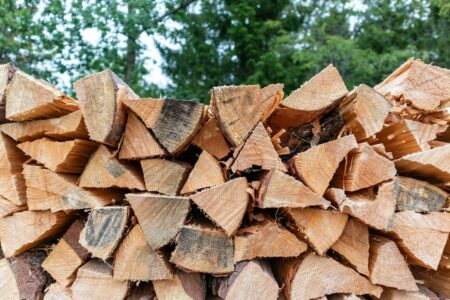
- Test any firewood you already have with a moisture meter. Seasoned, ready-to-burn firewood should read roughly 15 to 20 per cent moisture. Wood above that burns inefficiently and drives up creosote buildup inside the flue, one of the main causes of chimney fires.
- Don’t count on unseasoned wood being ready in time. Hardwoods such as oak or maple typically need 12 to 18 months to properly season, and softwoods need 6 to 12 months. If the wood in the yard was only split this spring or summer, it likely won’t be dry enough for a fire that actually burns clean this winter; buy properly seasoned wood instead rather than risk burning it wet.
- Stack and store firewood correctly. Keep the stack at least 6 inches off the ground on pallets or rails to stop rot, cover only the top with a tarp or sheet metal and leave the sides open so air keeps moving through the pile, and keep the stack no higher than 4 to 5 feet for stability. Store it close enough to reach easily but far enough from the house that it doesn’t give pests a bridge indoors.
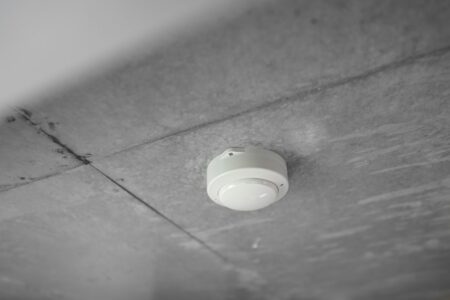
- Confirm smoke and carbon monoxide alarms are working. A wood-burning appliance is one of the more common sources of household CO, so this is not a step to skip; press the test button on every unit near the fireplace and on every storey of the home.
- Keep a fire extinguisher within reach. Know where it is and how to use it before it’s ever needed, not while smoke is already filling the room.
- Never leave a fire unattended, and keep the damper open until it is completely out. A fire left to smoulder overnight with the damper closed too early can push smoke and carbon monoxide back into the house instead of up the chimney.
- Know the warning signs of a chimney fire and act fast. A loud roaring or rumbling sound from the chimney, dense smoke or sparks and embers shooting from the top of the flue mean an active chimney fire: get everyone out, call the fire department, and don’t go back in to fight it. Short of an active fire, a strong hot or acrid smell from the fireplace between uses, or visible flaking or tar-like creosote when you shine a flashlight up into the firebox, means it’s time to call a WETT-certified technician before lighting another fire.
None of this replaces a licensed inspection, and a fireplace that hasn’t been checked in more than a year or two, or one nobody has used since moving in, should get a professional look before the first fire of the season rather than after a problem shows up. Handled together, though, the checklist above is what separates a fireplace that’s ready for a Canadian winter from one that’s just waiting for a cold night to reveal what got missed.
Sources: Canada Safety Council, AmeriSpec of Canada, Charnwood Stoves, Fireplace Universe, Baeumler Approved, Axeman.ca.