
The United States is open to a trade deal with Canada but is “not inclined to go to zero tariffs,” U.S. Trade Representative Jamieson Greer said Thursday, Oct. 1, 2026, a day after an informal conversation with International Trade Minister Maninder Sidhu at the G20 trade ministers’ meeting in Milwaukee, according to The Canadian Press.
The two spoke in a “pull-aside” on the sidelines of the two-day meeting on Wednesday, CP reported. The Globe and Mail described it as the first high-level meeting between the two countries since Canada-U.S. trade negotiations collapsed in August. Sidhu said he raised the cost of the dispute on both sides of the border. “I highlighted the implications of trade uncertainties on both sides of the border, especially the auto sector,” he said, according to CP.
Greer, speaking to Bloomberg on Thursday, said “there are a handful of outstanding issues that are quite difficult to resolve,” and cautioned that gaps remain between the two countries, CP and the Globe reported. He said his main point of contact is Canada-U.S. Trade Minister Dominic LeBlanc, with whom he speaks regularly, not Sidhu.
That distinction is worth noting. Ottawa now has two ministers working the trade file: LeBlanc handles the direct negotiation with Washington, while Sidhu’s job is to find customers elsewhere. Wednesday’s conversation was not a negotiating session, and neither side announced any progress.
The stakes are concrete. The U.S. maintains tariffs of 50 per cent on Canadian steel and aluminum, 25 per cent on autos and 10 to 25 per cent on forestry products, according to the Globe. This week Washington also expanded import bans to cover Canadian molasses, liquor and three-wheeled motorcycles, the paper reported, building on the bans we covered on Sept. 29. CP reported the U.S. has also threatened a 50 per cent tariff on Canadian vehicles starting Jan. 1 if no agreement is reached, which would hit an industry concentrated in southern Ontario and its parts suppliers.
Sidhu has framed diversification as Canada’s “Plan A.” He told reporters nearly one-third of Canadian exports now go to countries other than the U.S., the highest share in 40 years, according to the Globe. Greer dismissed that strategy, CP reported, arguing that expanding into low-growth economies cannot replace demand from the American market.
Both claims can be true at once. A rising non-U.S. share shows Canadian exporters are finding new buyers, but it can also reflect shipments to the U.S. shrinking under tariffs. With the U.S. still taking roughly two-thirds of Canadian exports by Sidhu’s own figure, no combination of new deals can fully offset American demand in the short term. Diversification is a long-term hedge, not a quick fix.
That is why the rest of Sidhu’s Milwaukee schedule matters. He met his French, Australian and Turkish counterparts on Wednesday and had one-on-one meetings on Thursday with officials from the European Union, India and Brazil, CP reported. Canada’s priorities include a digital trade agreement with the EU, progress on talks with the South American bloc Mercosur and an economic partnership agreement with India, which we reported last month appeared to be nearing.
The next markers come quickly. An EU summit is set for Montreal in October, and Indian Prime Minister Narendra Modi is expected in Canada in December, according to CP. The G20 leaders’ summit follows in Miami on Dec. 14-15. For workers in autos, steel and aluminum, the date that matters most may be Jan. 1, when the threatened vehicle tariff would take effect if Ottawa and Washington cannot close the gaps Greer described.
For younger Canadians, the dispute is already showing up in job security in manufacturing towns and in prices for goods that cross the border. Thursday’s comments suggest the best realistic outcome is a deal that lowers tariffs rather than removes them.
If you find reporting like this useful, consider supporting Canada News Media, an independent Canadian newsroom with no corporate parent.
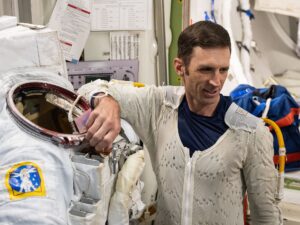
Sources: via The Canadian Press (CP24, National Newswatch) and The Globe and Mail. Photo: Maninder Sidhu in March 2026 (Sophie Bouquillon, CC BY 4.0, via Wikimedia Commons).