


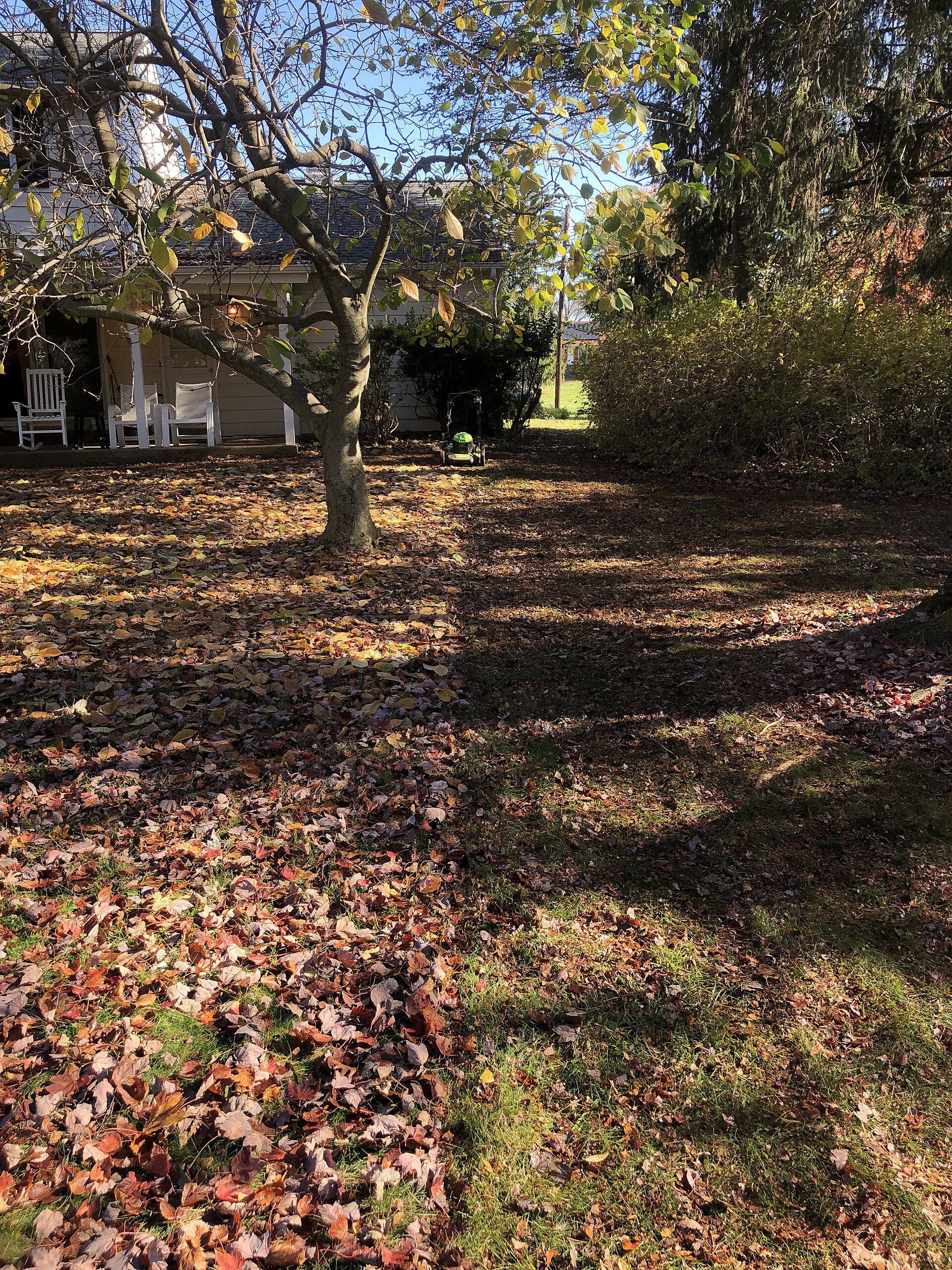
You can mulch fall leaves right into your lawn with a regular mower: wait for a dry day, raise the deck to its highest setting and make as many passes as it takes to chop the leaves into small pieces. The method saves raking and bagging, and it returns nutrients to the soil.
The advice comes from university extension researchers. Frank M. Watson of the University of Georgia’s College of Agricultural and Environmental Sciences said in a 2017 field report that chopping leaves increases the surface area available to decay bacteria, which speeds decomposition and returns organic matter to the soil. The same approach works in Canadian yards, though you will want to finish before snow arrives.
It also keeps leaves out of the street. A 2014 kawarthaNOW guide to leaf use in Peterborough, Ont., noted that shredding leaves on the lawn stops them blowing onto neighbouring properties, and that raking leaves to the curb can block storm drains. Municipal rules differ, so check your city’s leaf collection schedule and bag requirements before you set anything out.
Mulching works best when you treat it as a regular chore through the fall, not a single big job after the last leaf drops. A thin layer of shreds disappears into the grass. A thick layer can smother it.
Step 1: Wait for a dry day
Choose an afternoon when the leaves are dry. Watson said wet leaves mat down and will not be picked up by the mower, so you end up with clumps instead of fine shreds. If rain is in the forecast, wait for the grass and leaves to dry out first.
Step 2: Check the mower and the blade
A mulching blade chops leaves most finely, but a regular blade also works. It simply breaks the leaves down more slowly, Watson said. Check that the blade is not worn, because the fan tips usually wear first and worn tips mulch poorly. Read your owner’s manual for how to inspect or replace the blade, and shut off the engine and disconnect the spark plug wire before you touch it.
Step 3: Raise the deck and remove the bag
Set the cutting height to its highest setting and take off the clipping bag for the first pass, as outlined in a Bob Vila guide to mulching leaves. Wear eye protection and closed shoes, and keep children and pets away from the area while you mow.
Step 4: Spread thick piles into a thin layer
Rake heavy drifts into a thin, even layer first. Bob Vila’s guide said most mowers can mulch up to about 6 inches (15 centimetres) of leaves at once, but you should confirm that your own mower can handle that depth. Mowing weekly during peak season keeps the leaves from building past that point.
Step 5: Mow in passes until the pieces are small
Mow so the leaves are thrown toward the middle of the lawn, then keep making passes. Watson recommended continuing until the pieces are dime-size or smaller. Bob Vila’s guide put the target at about half an inch (1.3 centimetres) across. Expect to cover some areas more than once, especially with large, tough leaves such as maple and oak.
Step 6: Check how much grass is showing
When you finish, you should be able to see most of the lawn through the shreds. If the grass is hidden, there is too much leaf material. Rake some of it up or bag it with one more pass, using the leftover shreds in step 7.
Step 7: Put the extra shreds to work
Spread surplus shredded leaves over garden beds, around shrubs and in natural areas, where they add organic matter as they break down. If you compost, store two or three bags of dry leaves next to the bin over winter. The kawarthaNOW guide said layering them between kitchen scraps helps balance the nitrogen in food waste. Our guides to preparing your garden for winter and protecting rose bushes cover where mulch fits into the rest of the fall routine.
Mulched leaves can also cover newly planted bulbs and garlic, which we cover in our guides to planting garlic in fall and planting spring bulbs.
When to bag leaves instead
Bagging is the better choice if the leaves are wet, if they are piled much deeper than your mower can handle, or if they carry visible disease such as heavy spotting. Your city may also ask you to bag leaves in paper kraft bags, so check local rules. If your lawn still needs its last cut and feed of the season, see our guide to preparing your lawn for winter.
Leave steep slopes alone if you are not comfortable mowing them, and never mow on wet, slippery grass. If you are unsure about your mower’s limits, consult the manufacturer or a small-engine repair shop.
If you find reporting like this useful, consider supporting Canada News Media, an independent Canadian newsroom with no corporate parent.
Follow Canada News Media
Get the day's top Canadian stories and our two daily 60-second news videos wherever you scroll.
X Threads Facebook Instagram LinkedIn TikTok YouTube Pinterest Reddit Substack Flipboard Newsletter RSS