

On April 27, 1954, a delegation of Black Canadians, union members and community organizers travelled to Ottawa to tell the federal government that its immigration rules were discriminatory. It was an early, organized push by Black Canadians against a system that quietly favoured white applicants, and several of its leaders came from the same place: the sleeping cars of Canada’s railways.
The group was led by Donald Willard Moore, who co-founded the Negro Citizenship Association in 1951 with Bromley Armstrong and others, according to Wikipedia’s biography of Moore. The association formed in response to stricter immigration measures aimed at Black people. Moore became its first director, and his dry-cleaning and tailoring business served as its first headquarters.
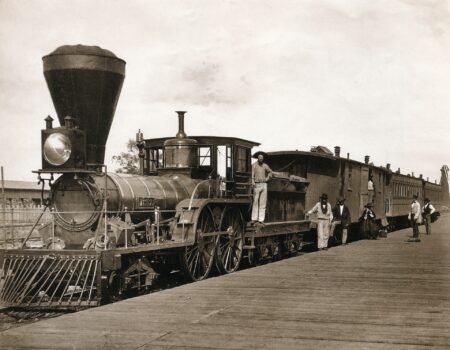
The delegation included association members and representatives of unions, labour councils and community organizations. Stanley Grizzle, then head of the Toronto division of the Brotherhood of Sleeping Car Porters, spoke for the association, according to the Myseum of Toronto. The Toronto porters’ chapter helped pay the fares, and the group left Union Station on a Canadian Pacific Railway train for the roughly eight-hour trip, Myseum says.
A railway union behind the effort
Grizzle’s path to Ottawa ran through the railway. The Canadian Encyclopedia says he began as a Canadian Pacific Railway sleeping car porter in June 1940, at age 22, and worked for the company for about 20 years. The Museum of Toronto reports that in 1945 the Brotherhood of Sleeping Car Porters negotiated a contract with the CPR, described as the first Black union in Canada to sign an agreement with a white employer. Grizzle was elected president of the Toronto CPR division in 1946, the Encyclopedia says.
That organizing experience mattered. The porters had already shown that Black workers could bargain collectively with a major employer. In the early 1950s, the Encyclopedia says, Grizzle also joined the Joint Labour Committee to Combat Racial Intolerance, which helped lead delegations urging governments to adopt anti-discrimination legislation. The Museum of Toronto notes that the porters’ union supported the 1954 delegation to Ottawa.
What the brief argued
The brief took aim at how Canadian law defined who counted as a “British subject.” According to Wikipedia’s account of the brief, the Immigration Act of 1923 excluded people from the British West Indies, India, Africa and other regions with large non-white populations from that preferred category. “Our delegation claims this definition of British subject is discriminatory and dangerous,” the brief stated, as quoted there.
According to Myseum, the delegation asked Ottawa to end an immigration policy that favoured white people and to accept immigrants from around the world. It called for more admissions from the West Indies, India, Pakistan, China and Ceylon, now Sri Lanka, whose quotas were then limited to a few thousand a year. It also asked for a program to bring Black women from the West Indies to work as domestic workers, and for settled immigrants to be able to sponsor family members.
Grizzle called the policy “utterly inconsistent with democratic principles and Christian ethics,” Myseum reports. The Museum of Toronto adds that he challenged the government’s claim that Black people could not survive Canada’s cold climate, and that the porters pushed for a points-based approach rather than race-based preferences.
Wikipedia reports that the brief was presented to Immigration Minister Walter Edward Harris, and that when Harris asked whether the demands included Chinese, East Indian and other non-white immigrants, Moore answered yes. The Canadian Encyclopedia describes the April 27, 1954 meeting as the first delegation of Black Canadians to meet the federal Cabinet about discriminatory immigration practices. The sources differ in how they describe who received the delegation, and this article does not try to reconcile them.
What followed
The sources do not show that the delegation won immediate change, and this article does not claim it did. Myseum says only that the briefs helped lay groundwork for Canada’s later shift toward multiculturalism. Wikipedia reports that immigration policies were relaxed in 1962 under Prime Minister John Diefenbaker’s government. Whether and how directly the 1954 brief contributed to that shift is a question for historians, and the sources reviewed here do not settle it.
Grizzle’s activism continued. In 1959 he and Jack White became the first Black Canadians to seek seats in the Ontario legislature, with Grizzle running for the CCF and finishing third with just over 9,000 votes, according to the Encyclopedia. He later became the first Black Canadian appointed a citizenship court judge, was named a Member of the Order of Canada in 1995, and died in Toronto on Nov. 12, 2016. His 1998 memoir was titled My Name’s Not George.
The 1954 trip also fits a longer pattern of labour and rights organizing explored in earlier coverage, including the porters’ fight to become conductors, Black Canadians and the civil rights movement, and Parliament’s 2021 recognition of Emancipation Day.
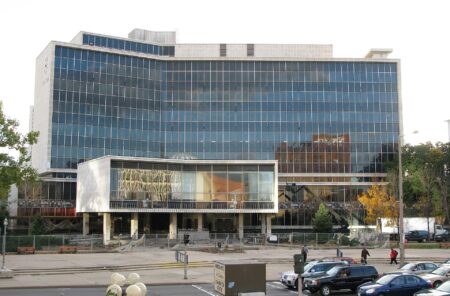
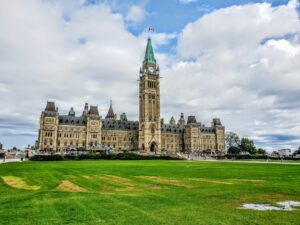
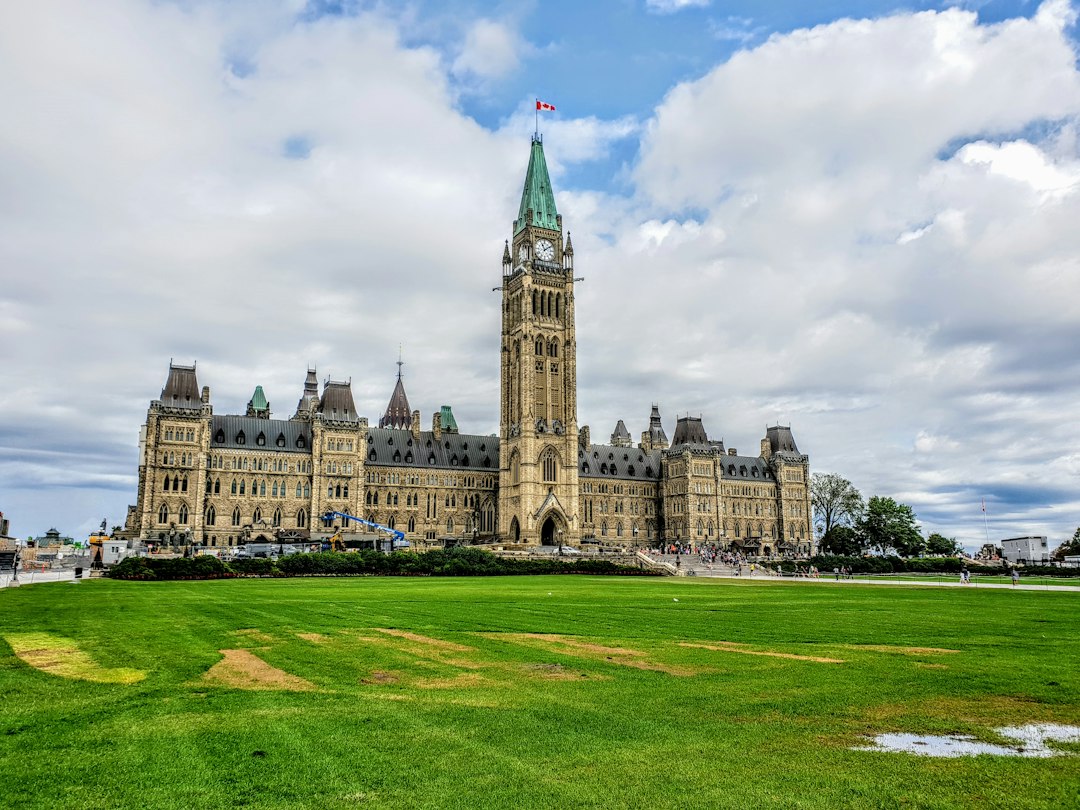
The photo above shows Parliament Hill in Ottawa, where the delegation presented its case. It is a file photo and does not depict the 1954 events or the people involved.
If you find reporting like this useful, consider supporting Canada News Media, an independent Canadian newsroom with no corporate parent.
Sources: Canadian Encyclopedia, “Stanley G. Grizzle” (thecanadianencyclopedia.ca/en/article/stanley-g-grizzle); Museum of Toronto, “The Brotherhood of Sleeping Car Porters” (museumoftoronto.com); Myseum of Toronto, “Porters go to Ottawa” (myseumoftoronto.com); Wikipedia, “Donald Willard Moore.”
Follow Canada News Media
Get the day's top Canadian stories and our two daily 60-second news videos wherever you scroll.
X Threads Facebook Instagram LinkedIn TikTok YouTube Pinterest Reddit Substack Flipboard Newsletter RSS