


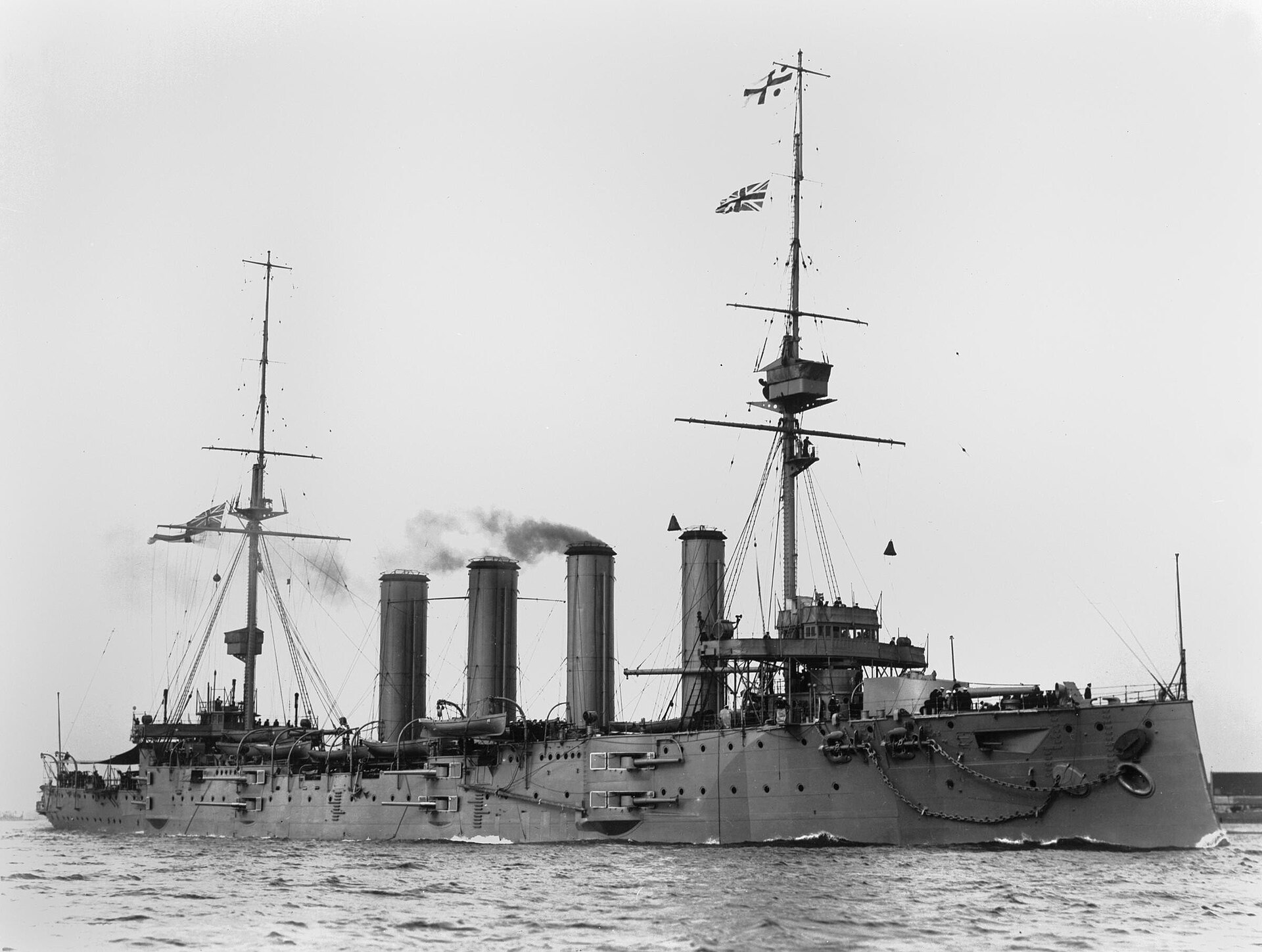
Four young Canadian midshipmen were lost on Nov. 1, 1914, when the Royal Navy cruiser HMS Good Hope was sunk by a German squadron off the coast of Chile in the Battle of Coronel, the first Canadian casualties of the First World War, according to the Royal Canadian Navy.
The dead were Malcolm Cann of Yarmouth, N.S., John Hatheway of Fredericton, and William Palmer and Arthur Silver, both of Halifax. A 2014 Department of National Defence news release said Cann and Hatheway were 19, and Palmer and Silver were 20. All four were members of the first graduating class of the Royal Naval College of Canada, which the release said was established in 1911, soon after the founding of the Royal Canadian Navy. The college has its own place in the story of the young service, which is also reflected in the arrival of HMCS Niobe at Halifax in 1910.
According to The Canadian Encyclopedia, seven of the college’s midshipmen volunteered to join Rear-Admiral Sir Christopher Cradock’s ship when it called at Halifax in August 1914. Four were transferred to Good Hope, which arrived there on Aug. 15. The 2014 release said Cann and Hatheway were chosen by lot, while Palmer, the top student in the class, and Silver, the senior cadet captain, were specifically requested by Cradock.
The Canadian Encyclopedia said Cradock sailed through the Strait of Magellan on Oct. 27 and intercepted a German squadron under Vice-Admiral Maximilian von Spee at dusk on Nov. 1, about 80 kilometres from Coronel. The German force included the armoured cruisers Scharnhorst and Gneisenau, along with light cruisers. Cradock’s ships were Good Hope, the armoured cruiser Monmouth, the light cruiser Glasgow and the armed merchant cruiser Otranto.
The German ships opened fire at 7:04 p.m., according to the encyclopedia. A salvo from Scharnhorst knocked out Good Hope’s forward 9.2-inch turret, and Gneisenau’s shells struck Monmouth. Within an hour, the encyclopedia said, both British warships were ablaze and sank without survivors. The 2014 release said Glasgow and Otranto escaped.
Sources differ on how the losses are described. The Canadian Encyclopedia said more than 1,600 sailors died on the two ships, including the four midshipmen. The other sources reviewed for this article, including the 2014 release and a 2019 Royal Canadian Navy article by Jennifer Gamble, a curator at the Naval Museum of Halifax, say all hands were lost but do not give a total. The encyclopedia describes the four as the first Canadians to die in battle in the war. The Gamble article calls them the first Royal Canadian Navy and Canadian casualties of the war.
Gamble wrote that a letter from Cann to his mother in Yarmouth is displayed at the Naval Museum of Halifax.
The defeat was avenged within weeks. The encyclopedia said the battle at the Falkland Islands on Dec. 8, 1914, saw the battle cruisers Invincible and Inflexible sink Scharnhorst and Gneisenau, among other German ships. It reported that only 215 of about 2,200 German sailors aboard the four ships sunk that day were rescued.
Canada marked the 100th anniversary of the battle in 2014. Rob Nicholson, then the defence minister, said in the release that it was his privilege to honour the valour of the sailors who made the ultimate sacrifice for their country. Vice-Admiral Mark Norman, then commander of the navy, said the midshipmen lived the traditional naval answer to the call of duty, “Ready Aye Ready.”
The anniversary falls days before Canadians observe Remembrance Day on Nov. 11, when the names of those lost in the First World War are recalled across the country.
If you find reporting like this useful, consider supporting Canada News Media, an independent Canadian newsroom with no corporate parent.
Follow Canada News Media
Get the day's top Canadian stories and our two daily 60-second news videos wherever you scroll.
X Threads Facebook Instagram LinkedIn TikTok YouTube Pinterest Reddit Substack Flipboard Newsletter RSS