

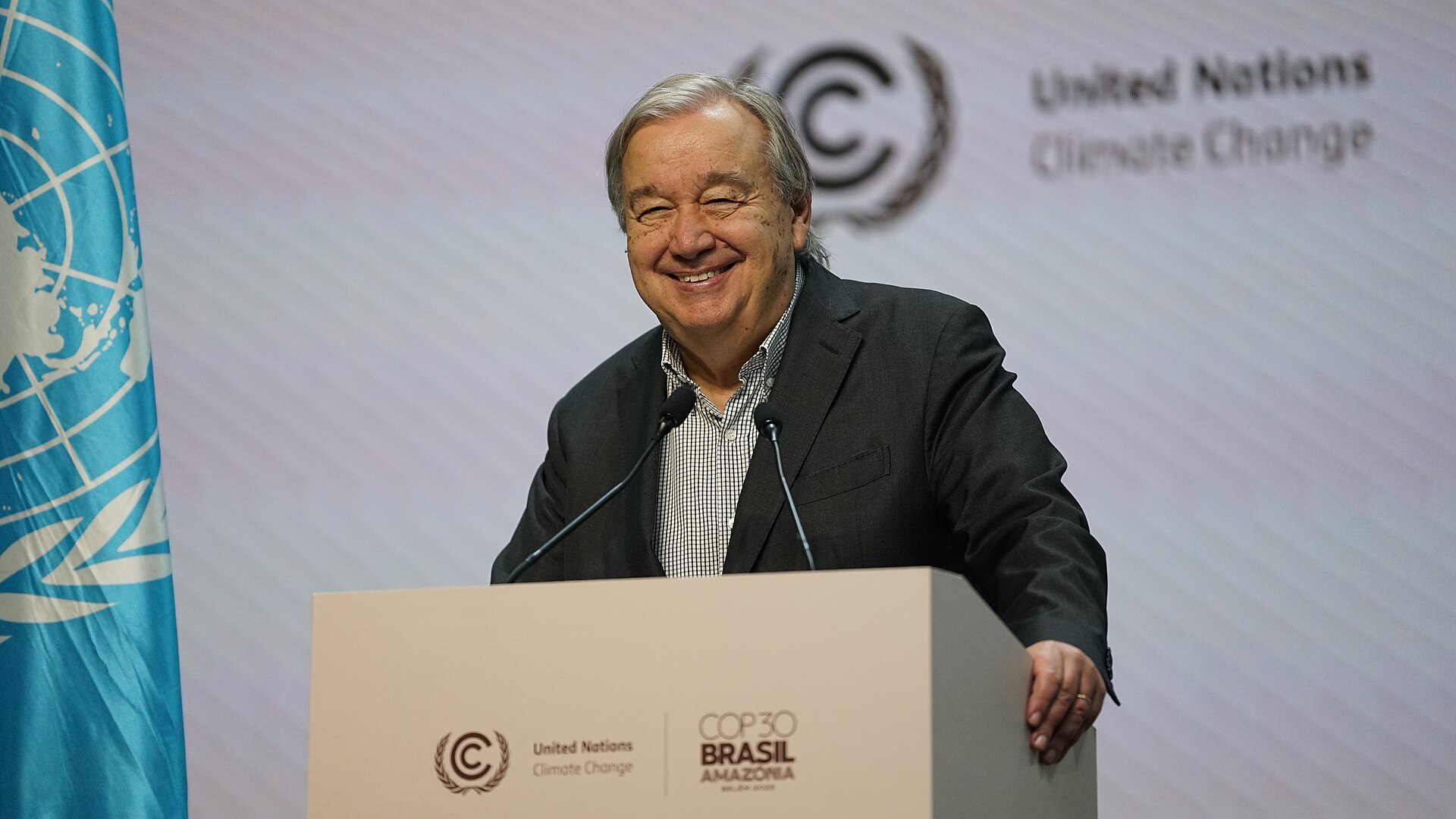
UN Secretary-General António Guterres said in Yerevan, Armenia, on Oct. 15, 2026, that the world is falling short of its 2030 nature targets, as nearly 200 countries prepare to open the COP17 biodiversity summit there on Oct. 19.
The numbers behind his warning are stark: for every $1 spent protecting or restoring nature, about $30 still goes to activities that harm it, according to UN figures reported by AFP via Courthouse News.
Guterres launched a UN report on progress under the 2022 global biodiversity pact, which sets 23 targets for 2030, including protecting 30 per cent of land and oceans. “It’s not all bad news … There is progress, but not enough. We are far from what is necessary,” he told reporters, AFP reported. He added that the war on nature “has not yet ended” and that “nature won’t thrive on good intentions.”
Government pledges would protect 27 per cent of land and inland waters and 12 per cent of oceans, short of the 30 per cent goal, Euronews reported in a story published Oct. 16.
Guterres singled out subsidies. “Subsidising fossil fuels is subsidising suicide,” he said, according to Euronews, which also quoted him urging governments “to end these handouts once and for all, and to use the savings for people and planet instead.” Countries pledged in 2022 to cut harmful subsidies by $500 billion a year by 2030, but both outlets said progress has been minimal. Euronews, citing UN estimates, put public subsidies that damage nature and climate at about $2.6 trillion a year.
AFP reported that Guterres also pointed to the “very strong influence” of industrial fishing, fossil fuels and logging over governments. Sue Lieberman of the Wildlife Conservation Society said: “Biodiversity is in crisis. Species are disappearing and ecosystems are collapsing.”
AFP reported that governments are not expected to make major new pledges at COP17. Euronews said finance will be a central focus of the talks, with developing countries looking for rich countries to honour money they have promised.
For Canadians, the summit is also a test of Ottawa’s own record. Ottawa said it plans to highlight its nature investments and its progress on the 30-by-30 goal at COP17, according to the federal release on an Ontario boreal forest purchase announced Oct. 13. The Canadian Press reported that the federal environmental watchdog found Canada was more than one million square kilometres short of its 2025 goal of protecting 25 per cent of its land and inland water. Secretary of State for Nature Nathalie Provost said the government is “steadfast in its goal of protecting 30% of our lands and waters by 2030.”
The subsidy question is live at home as well. The Narwhal reported in July 2025 that Canada committed in 2009 to phasing out “inefficient” fossil fuel subsidies but has not identified any such subsidies, and that estimates of federal oil and gas support range from $3 billion to $30 billion a year depending on the source and definition. Environmental Defence put the figure at $29.6 billion for 2024, including about $21 billion tied to the Trans Mountain pipeline, The Narwhal reported. The IMF figure it cited was $2 billion in direct subsidies in 2023.
Guterres, whose term is ending, is also the subject of a separate UN contest: see our report on the race to succeed him.
What happens next: COP17 opens Oct. 19 in Yerevan. The COP31 climate talks follow Nov. 9 to 20 in Antalya, Türkiye, where Euronews said EU finance ministers have called for a fossil fuel subsidy phase-out.
If you find reporting like this useful, consider supporting Canada News Media, an independent Canadian newsroom with no corporate parent.
Via Courthouse News (AFP) and Euronews on Yahoo News Canada. Quotes are as published by those outlets; the Canada News Media team did not independently confirm them.
Follow Canada News Media
Get the day's top Canadian stories and our two daily 60-second news videos wherever you scroll.
X Threads Facebook Instagram LinkedIn TikTok YouTube Pinterest Reddit Substack Flipboard Newsletter RSS