

Housing starts held flat or increased in five of Canada’s six largest markets in August even as resale activity fell in every one of them, a divergence between what builders are constructing and what buyers are purchasing that neither Canada Mortgage and Housing Corp. nor the country’s real estate boards captured in their separate releases this month.

CMHC’s August data, released Sept. 16, put the national seasonally adjusted annual rate of housing starts at 229,046 units, essentially unchanged from July’s 229,360. The six-month moving average, which CMHC treats as a smoother read on trend, slipped 1.3 per cent to 244,149 units. Kevin Hughes, CMHC’s deputy chief economist, said the modest national decline masked a provincial split: “modest gains in Quebec and Alberta only partially offset the decline in other provinces, most notably, Ontario.”
That provincial split shows up sharply at the city level, and it runs opposite to what is happening in the resale market. The Canadian Real Estate Association reported Sept. 15 that national home sales fell 6.9 per cent year over year in August to 37,504 transactions, even as the national average price edged up 0.6 per cent to $668,219. CREA senior economist Shaun Cathcart pointed to shifting macroeconomic conditions, saying “what has changed is the broader economic environment, with the Bank of Canada warning of rising inflation risks.”
Nowhere was the gap between building and buying wider than Calgary. The Calgary Real Estate Board recorded 1,660 sales in August, down 16 per cent from a year earlier, with the benchmark price down 1 per cent to $569,000 and semi-detached homes falling 18 per cent, the steepest decline of any housing type in the city. Yet CMHC’s six-month starts trend for Calgary rose 7 per cent to 23,298 units, the fastest pace of any major Canadian city. CREB chief economist Ann-Marie Lurie said sales in the upper end of the market held up “thanks to improved supply choice,” even as overall demand cooled.
Montreal showed a similar pattern. The Quebec Professional Association of Real Estate Brokers reported 2,853 sales across the Montreal census metropolitan area in August, down 13 per cent year over year, with active listings up 18 per cent from a year earlier. Median prices still rose, up 3 per cent for single-family homes and 4 per cent for condominiums. Camille Laberge, the association’s assistant director and senior economist, said the Montreal market “continues to rebalance,” with condos on the island of Montreal furthest along in that process. CMHC’s Montreal starts trend, meanwhile, rose 6 per cent to 30,492 units.
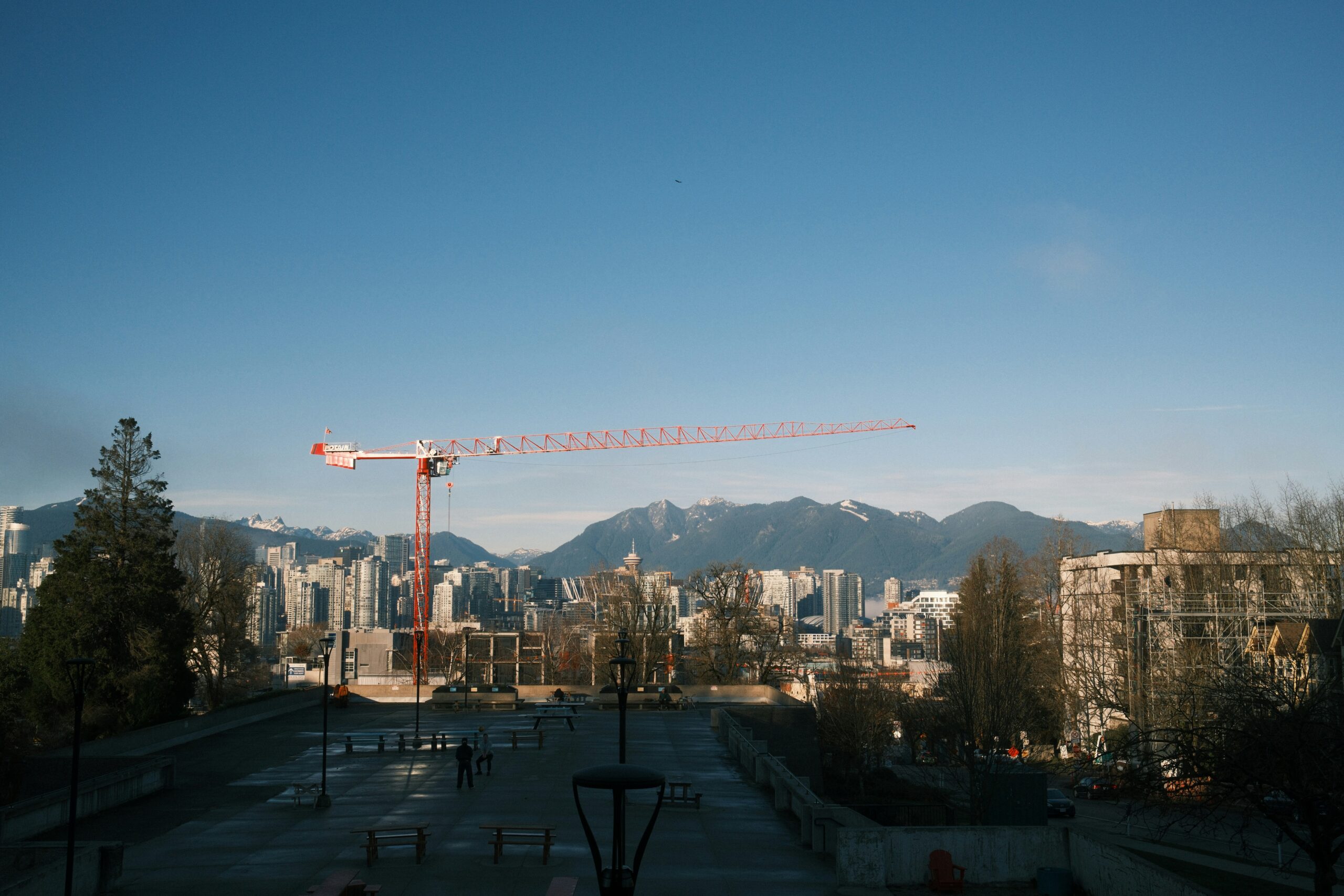
Vancouver told a gentler version of the same story. Greater Vancouver Realtors logged 1,869 sales in August, down 4.6 per cent year over year and 20.7 per cent below the region’s 10-year seasonal average, while the composite benchmark price fell 5.6 per cent to $1,081,900. GVR chief economist Andrew Lis attributed the softness to “the slowdown in immigration to our region, reduced investor demand, and mortgage rates that aren’t low enough to incentivize robust buying activity.” CMHC’s Vancouver starts trend still climbed 6 per cent, to 24,523 units.
Edmonton and Toronto showed milder versions of the same divergence. The Realtors Association of Edmonton reported August sales down 10 per cent year over year to 2,143, while CMHC’s Edmonton starts trend rose 1 per cent to 19,712 units. The Toronto Regional Real Estate Board reported sales down 2.1 per cent to 5,057, while CMHC’s Toronto starts trend was flat at 25,131 units.
Only Ottawa moved in the same direction on both measures. The Ottawa Real Estate Board reported sales fell 18.6 per cent year over year in August, the steepest drop among the six cities, while CMHC’s Ottawa-Gatineau starts trend was also the only one of the six to decline, down 2 per cent to 14,583 units. OREB president Tami Eades said prices held relatively steady despite the pullback, “which tells us this is not a simple story.”
The pattern fits how development pipelines actually work. Most units breaking ground now were financed and approved well before this summer’s resale slowdown became apparent, and Canada’s persistent housing shortage gives builders in high-demand cities a reason to keep projects moving even as resale buyers pull back. Whether that construction pace holds is now an open question. Hughes said CMHC expects the slowdown in starts to continue toward year-end nationally, a trend that, if it deepens in cities like Calgary and Montreal, would eventually bring construction back in line with the resale market it has so far outpaced.
Follow Canada News Media
Get the day's top Canadian stories and our two daily 60-second news videos wherever you scroll.