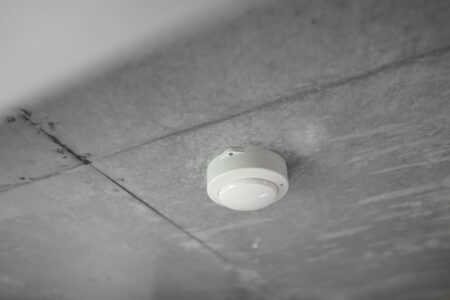



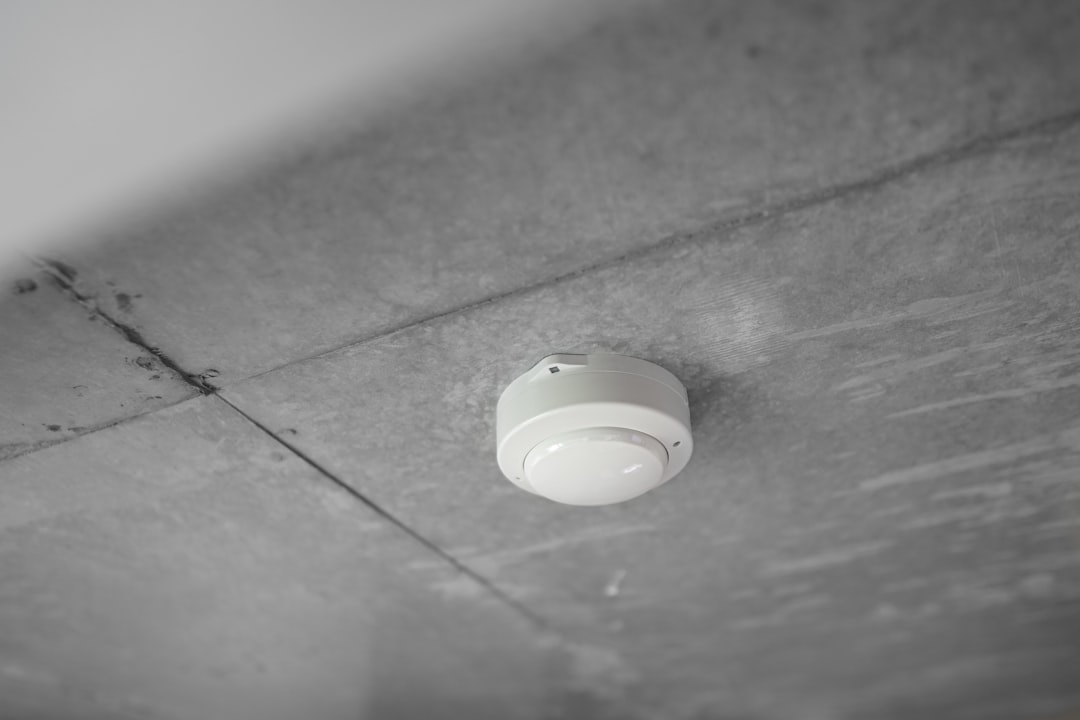
Testing a smoke or carbon monoxide alarm takes about 10 seconds: press and hold the test button until the alarm sounds loudly, then release. If it stays silent, chirps weakly or does nothing at all, the alarm needs a fresh battery — and if a fresh battery does not fix it, the unit itself needs to be replaced.
It is worth doing this week rather than in December. Heating season is the period when Canadian homes are most exposed to both hazards at once: furnaces and boilers fire up for the first time in months, fireplaces and wood stoves come back into use, and windows stay shut. Fuel-burning appliances that have sat idle since spring are exactly the ones most likely to vent improperly, and carbon monoxide is colourless, odourless and tasteless, which means an alarm is the only warning most households will get.
There is also a legal reason for Ontario residents to take stock now. Changes to the Ontario Fire Code that took effect Jan. 1, 2026 expanded where carbon monoxide alarms are required in homes with fuel-burning appliances, fireplaces or attached garages. Under the updated rules, a CO alarm is required adjacent to every sleeping area, and on every storey that does not contain a sleeping area — including basements and main floors. The requirement applies to existing homes, not just new construction, so a house that was compliant in 2025 may not be compliant today. Rules vary by province and municipality, so homeowners elsewhere should confirm requirements with their local fire department.
The good news is that this is genuinely a do-it-yourself job. Testing alarms, swapping batteries and cleaning dust off a sensor require no tools beyond a step ladder. The one exception is noted in Step 8 below.
-
Take inventory of every alarm in the house. Walk each floor and write down what you have and where. Smoke alarms are required on every level of the home and near each sleeping area, and fire services generally recommend one inside every bedroom as well. For carbon monoxide, follow the placement rule for your province — in Ontario, that is now adjacent to each sleeping area plus every storey without one. Combination smoke/CO units can satisfy both requirements on a given level.
-
Check the date stamped on the back of each unit. Take the alarm off its bracket and look at the label. Smoke alarms have a service life of roughly 10 years from the date of manufacture, and Quebec’s safety code is explicit that an alarm with no legible manufacturing date must be replaced immediately. Carbon monoxide alarms expire sooner — commonly five to 10 years, depending on the model — and many print an expiry date directly on the casing. An expired alarm can still chirp and still light up while its sensor no longer detects anything.
-
Press and hold the test button. Warn anyone in the house first, because the alarm is deliberately painful. Hold the button down for several seconds until the unit produces a full-volume alarm, then let go. A healthy alarm sounds within a few seconds. Fire services across the country recommend doing this at least once a month, not once a season.
-
Listen from where you actually sleep. Have someone stand in each bedroom with the door closed while you trigger the alarm. If the sound is muffled behind a closed door, that is a coverage gap worth fixing with an additional alarm rather than an assumption you will hear it at 3 a.m.
-
Replace the batteries. For alarms with removable batteries, install a fresh one and test again. Many Canadian fire departments suggest tying the swap to the twice-yearly clock change as a memory aid. Some newer alarms are sealed with a non-replaceable 10-year lithium battery — those cannot be serviced and are simply replaced as a unit when they expire or start chirping.
-
Vacuum the alarm. Dust and cobwebs clog sensing chambers and are a common cause of nuisance alarms. Use a soft brush attachment and gently vacuum the vents and the exterior of the unit every six months. Do not spray cleaners into it.
-
Buy the right replacement. Smoke alarms sold in Canada must comply with the CAN/ULC-S531 standard. For carbon monoxide, look for the CSA 6.19 mark, which is the current Canadian residential standard, or UL 2034. If you are buying a plug-in or hardwired CO alarm, choose one with battery backup so it keeps working through an outage.
-
Call a licensed electrician for hardwired units. If your alarms are wired into the home’s electrical system — standard in Canadian homes built since 2010, which require interconnected hardwired alarms with battery backup — do not attempt to replace the unit or its wiring yourself. Hire a licensed electrician. Household wiring work is regulated in every province, an incorrectly wired alarm can silently fail or break the interconnection between alarms, and the risk of shock or fire is not worth the saving. Changing the backup battery in a hardwired alarm is fine; touching the wiring is not.
-
Learn what the beeps mean. A single intermittent chirp every 30 to 60 seconds is almost always a low battery or an end-of-life signal, not a fire. A continuous, repeating alarm pattern is the real thing. Never remove the battery to silence a chirping alarm and leave it that way — dead alarms are a recurring finding in fatal Canadian house fires.
-
Book the annual appliance inspection. Alarms are the last line of defence, not the first. Have your furnace, water heater, fireplace and any other fuel-burning appliance serviced each year by a qualified technician, and keep exterior vents and chimneys clear of nests, snow and ice. Blocked venting and cracked heat exchangers are among the most common sources of household carbon monoxide.
-
Know the response before you need it. If a CO alarm sounds or anyone in the home has symptoms of carbon monoxide poisoning — headache, nausea, dizziness, confusion, drowsiness — get everyone outside immediately and call 911. Leave doors and windows closed so responders can take an accurate reading. Flu-like symptoms that improve when you leave the house and return when you come back are a classic warning sign.
One last note on ladders: use a proper step ladder on level ground rather than a chair, and have someone steady it. If an alarm sits on a vaulted or two-storey ceiling you cannot reach safely, that is a job for a professional or a telescoping alarm-testing pole, not an improvised stack of furniture.
Testing every alarm in an average house takes perhaps 15 minutes. Doing it before the furnace runs all winter, rather than after, is the whole point.
Sources: Town of New Tecumseth Fire and Emergency Services, Ontario Fire Code changes effective Jan. 1, 2026; City of Toronto, Smoke Alarms; City of Calgary, Smoke Alarms; Régie du bâtiment du Québec, Residential Occupancies; CSA Group, CSA 6.19 Residential Carbon Monoxide Alarming Devices; Government of Yukon, Prevent carbon monoxide poisoning.
Follow Canada News Media
Get the day's top Canadian stories and our two daily 60-second news videos wherever you scroll.
X Threads Facebook Instagram LinkedIn TikTok YouTube Pinterest Reddit Substack Flipboard Newsletter RSS