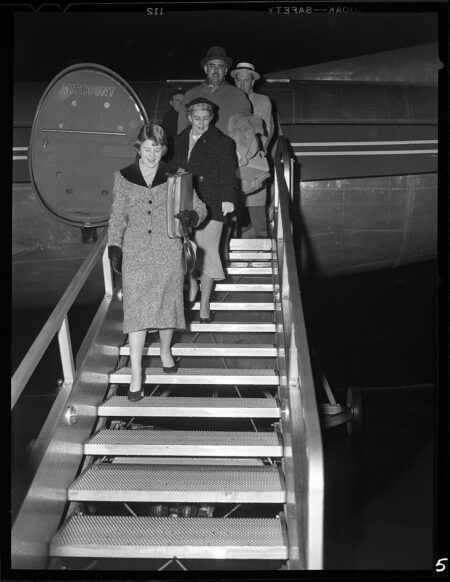


On Sept. 15, 1959, Georges-Philéas Vanier was installed as Canada’s 19th governor general, becoming the first French Canadian to hold the office in the 92 years since Confederation. He was 71 years old, had one leg, and a heart condition his doctors were already worried about.
“My first words are a prayer,” Vanier said at his installation, according to The Canadian Encyclopedia. “May almighty God … give peace to this beloved land of ours (and) the grace of mutual understanding, respect and love.” He added: “If Canada is to attain the greatness worthy of it, each of us must say, ‘I ask only to serve.'”
The appointment had come from Prime Minister John Diefenbaker, and the Office of the Governor General records that it was announced at a cabinet meeting in Halifax presided over by Queen Elizabeth II. Vanier succeeded Vincent Massey, who in 1952 had been the first Canadian-born person in the job. Massey’s appointment had ended the long run of British peers at Rideau Hall. Vanier’s did something narrower and, in 1959, more pointed: it put a francophone in the Crown’s Canadian office for the first time.
He arrived with an unusual résumé for a viceregal appointment. Born in Montreal on April 23, 1888, and called to the Quebec bar in 1911, Vanier was a founding officer of the 22nd Battalion, the French-Canadian unit that became the Royal 22e Régiment, the Van Doos. He fought at the St. Eloi Craters and at Vimy Ridge, won the Military Cross and the Distinguished Service Order, and on Aug. 28, 1918, lost his right leg to a German shell near Chérisy, France. He refused to be sent home. “I simply cannot go back to Canada,” he said, “while my comrades are still in the trenches in France.”
In 1921 he was appointed aide-de-camp to governor general Lord Byng, the British general who had commanded the Canadian Corps at Vimy, and moved into Rideau Cottage on the Rideau Hall grounds with his new wife, Pauline Archer. Thirty-eight years later the couple returned to the same property as the viceregal pair.
Between those two arrivals came a diplomatic career that is the least-remembered part of his record and arguably the most consequential. Vanier was Canadian minister to France in 1939 and fled Paris by car when the Germans took the city in 1940, having first helped arrange evacuations for Canadians and refugees. Back in Ottawa, he pressed the King government to loosen Canada’s restrictive refugee rules. “Canada has a wonderful opportunity to be generous and yet profit by accepting some of these people,” he wrote to the prime minister in 1940, according to The Canadian Encyclopedia, which records that the effort met mostly indifference and hostility. In April 1945, a week after its liberation, he toured the Buchenwald concentration camp and told CBC Radio: “How deaf we were then, to cruelty and the cries of pain which came to our ears.”
His eight years at Rideau Hall coincided with a run of minority governments and the acceleration of the sovereignty movement in Quebec. On Saint-Jean-Baptiste Day in 1964 he was heckled in Montreal by separatist protesters who called him a sellout. He kept making the same argument anyway. “The road of unity is the road of love,” he said in one of his last speeches. “We can’t run the risk of this great country falling into pieces.”
He inaugurated the new national flag in 1965, created the Vanier Cup for university football the same year, and with Pauline founded the Vanier Institute of the Family after a conference held at Rideau Hall in 1964.
Vanier died in office of heart failure on March 5, 1967, the morning after watching a hockey game, only the second governor general to die in the post since Confederation. Rideau Hall received more than 15,000 messages of sympathy. A Maclean’s ranking of the most influential Canadians in history later placed him first, though the encyclopedia’s own article gives the year of that list as both 1988 and 1998 in different passages. Historian Jack Granatstein’s assessment, quoted there, is the tidier verdict: “Vanier was Canada’s moral compass as governor general.”
Sources: The Canadian Encyclopedia (Jacques Monet, S.J., updated by Danny Kucharsky); the Office of the Secretary to the Governor General of Canada; Library and Archives Canada.