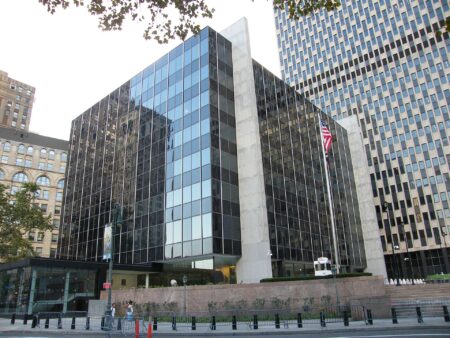



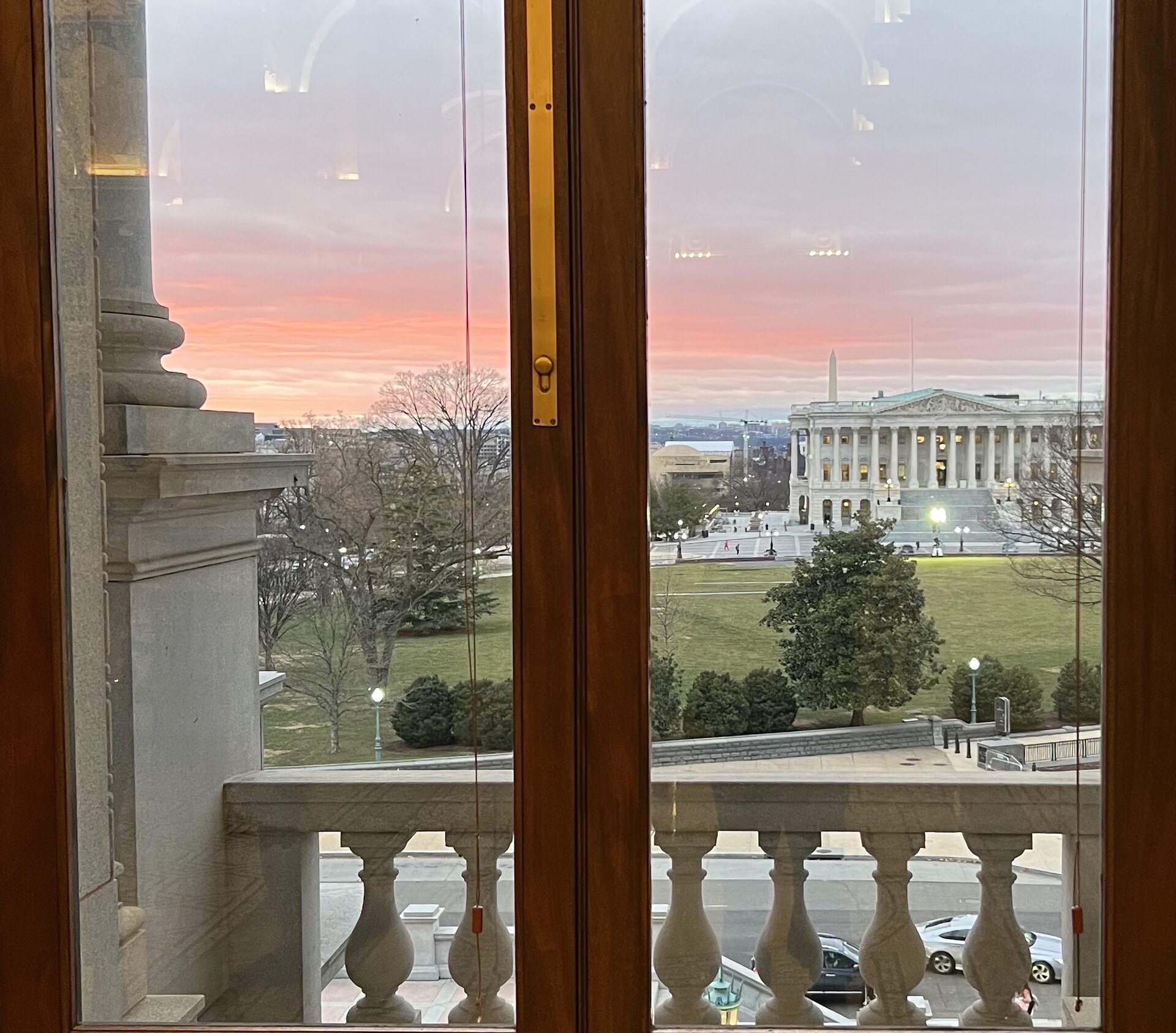
The U.S. Supreme Court on Oct. 22 let New Hampshire enforce a law that bars student ID cards as voter identification in the Nov. 3 midterm elections, with Justice Ketanji Brown Jackson the only justice recorded as dissenting.
The unsigned order, 12 days before Election Day, means high school and college students in the state cannot use school ID cards to register, to request an absentee ballot or to check in at the polls, the New Hampshire Bulletin reported.
The Court’s docket in Scanlan v. Coalition for Open Democracy (No. 26A512) shows the justices granted the state’s application for a stay of two preliminary injunctions issued by the U.S. District Court for the District of New Hampshire on Oct. 2 and Oct. 5. The stay lasts while the case is appealed to the U.S. Court of Appeals for the First Circuit and through any timely petition asking the Supreme Court to hear it. The order gave no reasons, and no vote count was published.
The law, House Bill 323, was signed by Gov. Kelly Ayotte in April and removed high school, college and university ID cards from the identification voters can use. Voting-rights groups led by the Coalition for Open Democracy sued in August, arguing the law burdens young voters under the First, 14th and 26th amendments. The 26th Amendment lowered the voting age to 18.
U.S. District Judge Joseph Laplante did not block the law itself. He wrote that the state “has not identified any security or integrity concern specific to student ID cards,” but found the plaintiffs unlikely to prove the law unconstitutional. He instead ordered the Secretary of State to correct April guidance that had wrongly told officials student IDs could be accepted, which he said had confused local election officials. Secretary of State David Scanlan issued revised guidance the next day, according to the plaintiffs’ filing.
New Hampshire asked the Supreme Court for the stay on Oct. 15. It argued, under what is known as the Purcell principle, that courts should avoid changing election rules close to an election, and that retraining officials was impractical. The Republican National Committee filed a brief supporting the state. The plaintiffs responded Oct. 19 that the revised guidance had become the status quo and that a stay would change the rules a second time in a month.
Jackson wrote that the district court’s order was a “targeted order” addressing Scanlan’s “publicized misstatement” of the law, according to The Dartmouth’s account of her dissent. Fox 9 reported that she wrote the court had only ordered the Secretary of State to fix misleading statements so they matched the written law.
Attorney General John Formella’s office said the state has a responsibility to protect the integrity of its elections, The Dartmouth reported. Olivia Zink, a spokesperson for the Coalition for Open Democracy, said the ruling injects uncertainty into the midterms.
Scanlan’s office said student ID cards cannot be used to prove identity when registering to vote. A separate “safety valve” provision in the law lets a voter without other identification offer evidence that reasonably establishes who they are, and the Bulletin and the district court’s ruling noted that a student ID can be part of that evidence. Liz Tentarelli, president of the League of Women Voters of New Hampshire, said the state’s motor vehicles division is not equipped to issue non-driver IDs for voting purposes in a timely manner. Hanover election officials reported no problems with student IDs in the Sept. 8 primary, The Dartmouth reported.
New Hampshire is one of 11 states that do not allow student IDs for voter identification, VNews reported, and this is the first such case to reach the Supreme Court. Challenges in Idaho and Tennessee failed. An Indiana case is scheduled for oral argument Oct. 27.
The order is the latest court action on election rules ahead of the midterms. Earlier this week the Justice Department sued to block an Alaska Senate result if Democrat Mary Peltola wins, as we reported in DOJ sues to block Alaska Senate result if Peltola wins, and it earlier sued California over 20,000 alleged noncitizen voters. Polls in New Hampshire open Nov. 3. The First Circuit appeal continues.
Via the New Hampshire Bulletin, The Dartmouth, Fox 9, VNews and the Supreme Court docket.
If you find reporting like this useful, consider supporting Canada News Media, an independent Canadian newsroom with no corporate parent.
Follow Canada News Media
Get the day's top Canadian stories and our two daily 60-second news videos wherever you scroll.
X Threads Facebook Instagram LinkedIn TikTok YouTube Pinterest Reddit Substack Flipboard Newsletter RSS