


Scotiabank chief economist says downturn could jostle economy into more normal, productive future
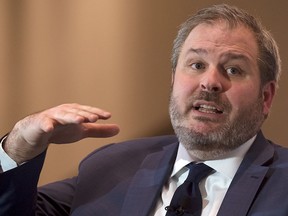
We may be in for some rocky months, but a recession later this year could ultimately help jostle the economy back to a state of normalcy, the Bank of Nova Scotia’s chief economist said this week.
Speaking at the Canadian Fintech Summit in Toronto on April 19, Jean-François Perrault made the case that the past decade-plus has been anything but normal, in economic terms.
But the capital recycling that takes place during a recession — and Perrault, like a number of other leading economists, expects one this year — could reset things.
“(A recession) does create conditions for a different perspective on risk appetite, a different perspective on where capital comes from, and despite the fact that things are slowing down, to some extent, the greater diversification of where capital is going into the economy,” Perrault said. “And that, I think, ultimately is a very positive thing. It actually sets the stage for rebound after the recession.”
“But as those firms fail, as firms exit certain sectors, it creates opportunity for others or allows capital to move from one part of the economy where it’s less productive, to another part of the economy where’s it more productive,” he said.
In a more normalized environment, he sees the Bank of Canada leaving interest rates in the two to three per cent range, which would be in line with the central bank’s neutral rate range, which is meant to neither contribute to nor hinder economic growth. In this return to normal, Perrault also expects that risk appetite will grow.
To get to that two to three per cent range, the bank will have to reverse course and start cutting interest rates.
“We are at a point now where the conversation is much more about when are central banks going to cut rates and how low do they go once they start cutting,” Perrault said. “And this is where history is a little bit of a tricky thing. We think, for instance, the Bank of Canada and the Fed will start cutting rates early next year.”
The Bank of Canada expects it will reach its goal of bringing inflation down to its two per cent target from the March reading of 4.3 per cent by 2024. It’s not clear whether the central bank will cut rates in that same timeframe, but it appears to be what markets are pricing in and what economists are expecting. However, governor Tiff Macklem said it was too soon to be talking about rate cuts right now.
“Central banks are a little bit late to the game, so they tightened a little bit too slowly and as a result, they had to raise rates more than we anticipated,” Perrault said. “Now, they’re not going to go out there and say ‘We want to create a recession’ — of course not. But the reality is that when central banks historically tighten a lot, and there are a few episodes of this, they tend to trigger recessions.”