


On Oct. 1, 1986, Mi’kmaw communities across the Maritimes marked the first Treaty Day, answering a call from Grand Chief Donald Marshall Sr. to “observe October 1, 1986, and every year thereafter as Treaty Day,” according to the Union of Nova Scotia Mi’kmaq. Thursday marks the 40th time the day has been observed.
The date was not chosen at random. It comes from the Treaty of 1752, signed at Halifax on Nov. 22, 1752, by Jean-Baptiste Cope, chief of the Shubenacadie (Sipekne’katik) Mi’kmaq, and Peregrine Hopson, then governor of Nova Scotia, according to The Canadian Encyclopedia. The agreement named Oct. 1 as the day the Mi’kmaq would receive gifts from the Crown to “renew their friendship and submissions,” the Union of Nova Scotia Mi’kmaq notes. It also promised “truck houses,” or trading posts, for Mi’kmaw use, though The Canadian Encyclopedia records that none were ever built under its terms.
For most of the next two centuries, the treaty carried little weight in Canadian courtrooms. In the 1920s, Gabriel Sylliboy, who in 1919 became the first Mi’kmaq elected Grand Chief, was charged in Inverness County, Cape Breton, with possessing muskrat and fox pelts out of season under Nova Scotia’s Lands and Forests Act. He argued that the 1752 treaty protected his right to hunt. Sources differ on the timeline, with some dating his arrest to 1927 and others citing a 1928 conviction, but the decisive ruling came on Sept. 10, 1929, when acting county court judge Patterson upheld the conviction. The judge found the 1752 document was not in reality a treaty and that it covered only a small band at Shubenacadie, not Cape Breton Mi’kmaq.
That reasoning stood for more than half a century. It began to give way after 1982, when the Constitution Act recognized and affirmed existing Aboriginal and treaty rights. The test case came from James Matthew Simon, a member of the Shubenacadie Indian Brook band, who was charged on Sept. 21, 1980, with possessing a rifle and shotgun cartridges on West Indian Road in Hants County, N.S., according to the court record in Simon v. The Queen.
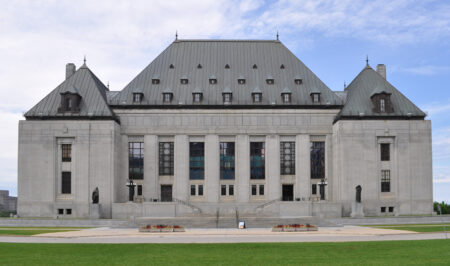
On Nov. 21, 1985, the Supreme Court of Canada ruled unanimously in Simon’s favour. The court held that the Treaty of 1752 was still in force, that it protected modern Mi’kmaw hunting, and that it exempted treaty beneficiaries from the provincial Lands and Forests Act. The decision, reported at [1985] 2 S.C.R. 387, was among the first to treat a Peace and Friendship Treaty as a treaty under Section 88 of the Indian Act, and it overturned the reasoning of the Sylliboy ruling.
Less than a year later, Marshall issued his invitation, framing Treaty Day as a way “to commemorate the unique and special relationship that exists between the Mi’kmaq and her Majesty,” as recorded by the Union of Nova Scotia Mi’kmaq. In 1993, Nova Scotia Premier John Savage and Mi’kmaq Grand Chief Ben Sylliboy proclaimed October as Mi’kmaq History Month, with Treaty Day as its opening, according to the same organization.
The story of the first person to invoke the treaty in court reached its own conclusion decades later. On Feb. 16, 2017, Lt.-Gov. J.J. Grant granted Gabriel Sylliboy a posthumous free pardon, along with an apology from the province, according to the Nova Scotia government. It was only the second posthumous pardon in the province’s history, after civil rights pioneer Viola Desmond, CBC News reported at the time. Sylliboy had died in 1964.
Today, Treaty Day is marked each Oct. 1 with ceremonies in Halifax and in Mi’kmaw communities throughout Mi’kma’ki, the traditional territory spanning present-day Nova Scotia, Prince Edward Island, much of New Brunswick, the Gaspé Peninsula and Newfoundland. Forty years on, the day remains tied to a 274-year-old promise that Canada’s highest court confirmed was never extinguished.
If you find reporting like this useful, consider supporting Canada News Media, an independent Canadian newsroom with no corporate parent.
Sources: Union of Nova Scotia Mi’kmaq; The Canadian Encyclopedia; Simon v. The Queen, [1985] 2 S.C.R. 387; Government of Nova Scotia news release, Feb. 16, 2017; CBC News.