
On April 2, 1814, Vice-Admiral Sir Alexander Cochrane issued a proclamation from Bermuda offering to take in people who wished to leave the United States, with their families, aboard British ships. In practice, the offer reached enslaved people in the Chesapeake region and beyond. Over the next two years, according to the Canadian Museum of Immigration at Pier 21, more than 3,500 of them escaped to British lines, and nearly 2,000 ended up in Nova Scotia. They are known today as the Black Refugees.
Their story is often told as one of arrival. The record shows that the harder chapter began after they landed in Halifax.
Arrival and quarantine
The Black Cultural Centre for Nova Scotia says about 1,200 refugees came from the Chesapeake Bay area and Georgia in 1813 and 1814, with another 800 arriving at the war’s end by way of Bermuda. Smaller numbers kept coming until 1816. Pier 21 estimates that about 400 others went on to New Brunswick.
Pier 21 reports that more than 700 refugees passed through the quarantine centre on Melville Island, a former prisoner-of-war site in Halifax harbour, in its first months of operation in 1815. Sherbrooke, then Lieutenant Governor, presided over a colony that had no plan for settling so many people at once.
Land without title
The refugees were settled mostly outside Halifax. The Black Cultural Centre says almost 1,000 went to Preston, while others settled at Upper Hammonds Plains, Beech Hill (later Beechville) and Campbell Road (later Africville). Pier 21 notes that Africville was settled in 1848, so some of that movement came later.
The terms were poor. Pier 21 says the government issued tickets of location or licences of occupation rather than outright grants, and the lots were limited to 10 acres of rocky, infertile ground. The Black Cultural Centre states that the refugees “faced discrimination in land grants, jobs and the distribution of supplies.” Pier 21 reports that Hammonds Plains received an additional 600 acres in 1834, and the Prestons received 1,800 acres in 1842. Those later additions point to how long the question of land stayed unsettled.
Weather and pests made it worse. Both sources describe the “year with no summer” in 1816, when the ground stayed frozen into June, and the “year of the mice” that destroyed crops.
The Trinidad offer
The government eventually encouraged some refugees to move again. Pier 21 dates the pressure to 1821 and says only 81 adults and 14 children accepted the offer to relocate to Trinidad. The Black Cultural Centre gives the same total as 95 people. According to Pier 21, most refused because slavery still existed there. The two sources do not fully agree on every figure in this period, and early counts of refugees varied, so the numbers here should be read as estimates.
What they built
Most stayed. The Black Cultural Centre says they overcame poor land and widespread racism “to not only survive but to thrive.” Pier 21 credits Richard Preston with founding the African Baptist Church in 1832, an institution that anchored these communities. Descendants of the Black Refugees still live in Preston, Hammonds Plains and Beechville, and their communities carry a documented history that begins with a naval proclamation and continues through a long fight over who owned the ground beneath them.
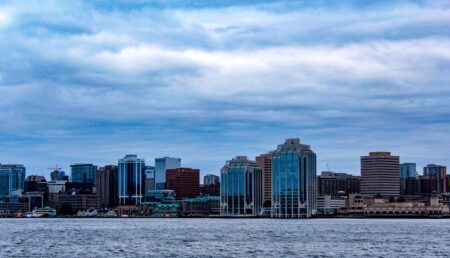
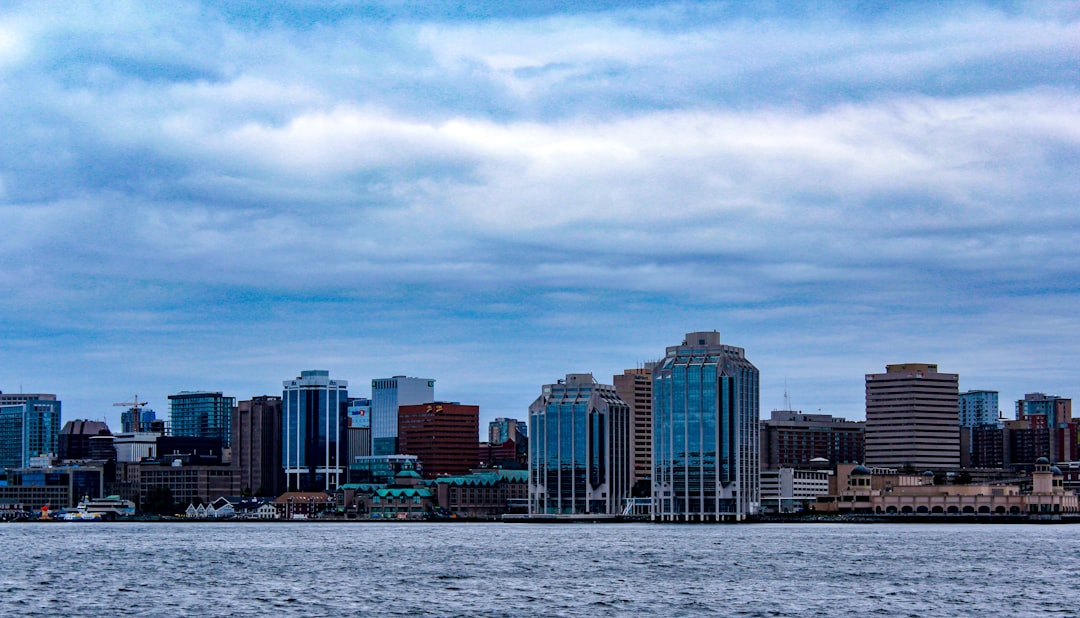
File photo: the Halifax waterfront, where refugees first arrived. This photo does not depict the refugees or the events described.
If you find reporting like this useful, consider supporting Canada News Media, an independent Canadian newsroom with no corporate parent.
Sources: Canadian Museum of Immigration at Pier 21, “Shaping a Community: Black Refugees in Nova Scotia” (pier21.ca); Black Cultural Centre for Nova Scotia, “Black Migration in Nova Scotia” (bccns.com).