


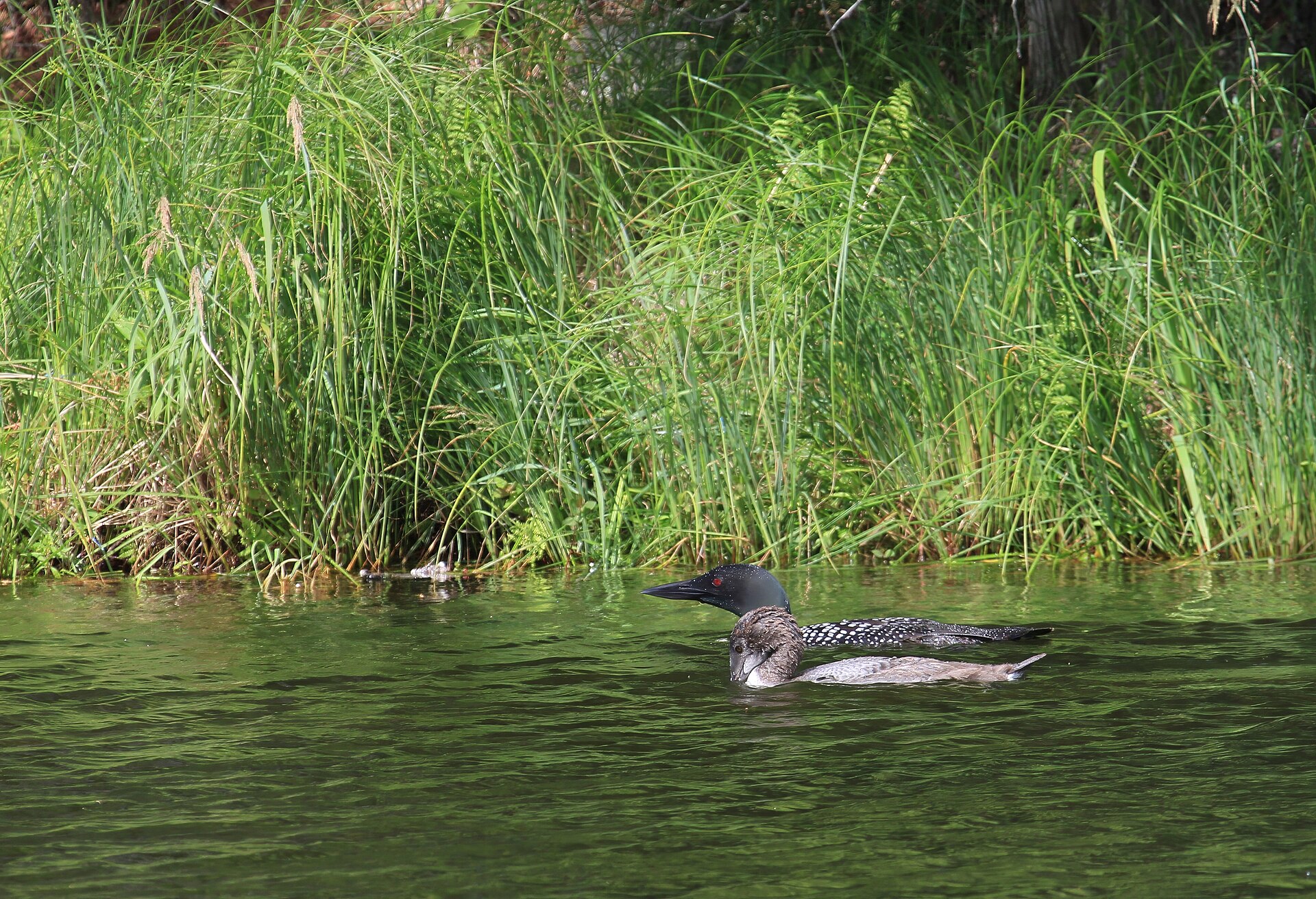
Common loons are raising far fewer chicks than they did a few decades ago across most of North America, according to a study published Thursday in the journal FACETS, with the steepest losses on the Prairies and in Atlantic Canada.
The research was led by Birds Canada with more than 20 co-authors from Canada and the United States. It analyzed about 45,000 loon breeding attempts on roughly 3,400 lakes in nine provinces and seven U.S. states between 1975 and 2023, much of it collected by volunteers in the Canadian Lakes Loon Survey and similar programs.
Chick production fell by about 40 per cent on average in 10 of the 12 regions studied, Birds Canada said. The declines ranged from 14 to 74 per cent depending on the region and the time period.
Losses were about 65 per cent across Alberta, Saskatchewan and Manitoba since the early 1990s, and 74 per cent on Canada’s East Coast, CBC News reported. Declines were also found in British Columbia and Ontario. Only Quebec and Maine showed chick production that was stable or slightly increasing.
“The most alarming thing is the extent of this decline,” said Matthew Fuirst, an ecologist with Birds Canada and one of the study’s authors.
Canada is home to 94 per cent of the world’s roughly 254,000 breeding pairs of common loons, Birds Canada said, which gives the country a special responsibility for the species.
The researchers have not pinned down a single cause, and the answer may differ by region. The working hypothesis favoured by the international Loon and Diver Research Working Group, which Birds Canada co-founded in 2021, is that lake water is getting cloudier. As climate change brings more extreme rain, more sediment and organic matter washes into lakes, making it harder for diving loons to see and catch fish to feed their chicks.
“It’s this domino effect of climate change basically down to water quality,” Fuirst told CBC News.
A 2024 study by scientists at Chapman University in California linked falling water clarity on northern Wisconsin lakes to fewer loon chicks and adults there. Birds Canada said it is now using satellite-derived water clarity data to test whether the same link holds across the rest of the breeding range.
Nicola Koper, dean of the faculty of environment at the University of Northern British Columbia, who was not involved in the study, called the results alarming. “This study design is very strong, and frankly, I consider the results that they are presenting here as being alarming,” she said. Koper noted that heavier rain and flooding can also destroy low-lying nests or drown eggs.
The study’s authors cautioned that chick numbers are not the only measure of a population’s health, but said long-term drops could signal looming population declines on the Prairies, in Ontario and in Atlantic Canada. Birds Canada said data from the Breeding Bird Survey, summarized in The State of Canada’s Birds with Environment and Climate Change Canada, already shows fewer adult loons across most of southern Canada over the past decade.
Birds Canada said lead fishing tackle is the leading cause of death in adult common loons, and asked anglers to switch to lead-free sinkers and jigs, dispose of fishing line responsibly and keep a safe distance from loons on the water. Fuirst said cottagers can help by keeping shorelines natural. Volunteers can join the Canadian Lakes Loon Survey, which has had more than 4,000 participants.
The findings add to a growing body of Canadian research on how a changing climate is affecting wildlife and wetlands, including recent coverage of Alberta’s eased wetland drainage rules, the push to meet protected area targets and the plan to protect 81,400 hectares of Ontario boreal forest.
If you find reporting like this useful, consider supporting Canada News Media, an independent Canadian newsroom with no corporate parent.
Sources: Birds Canada; CBC News.
Follow Canada News Media
Get the day's top Canadian stories and our two daily 60-second news videos wherever you scroll.
X Threads Facebook Instagram LinkedIn TikTok YouTube Pinterest Reddit Substack Flipboard Newsletter RSS