


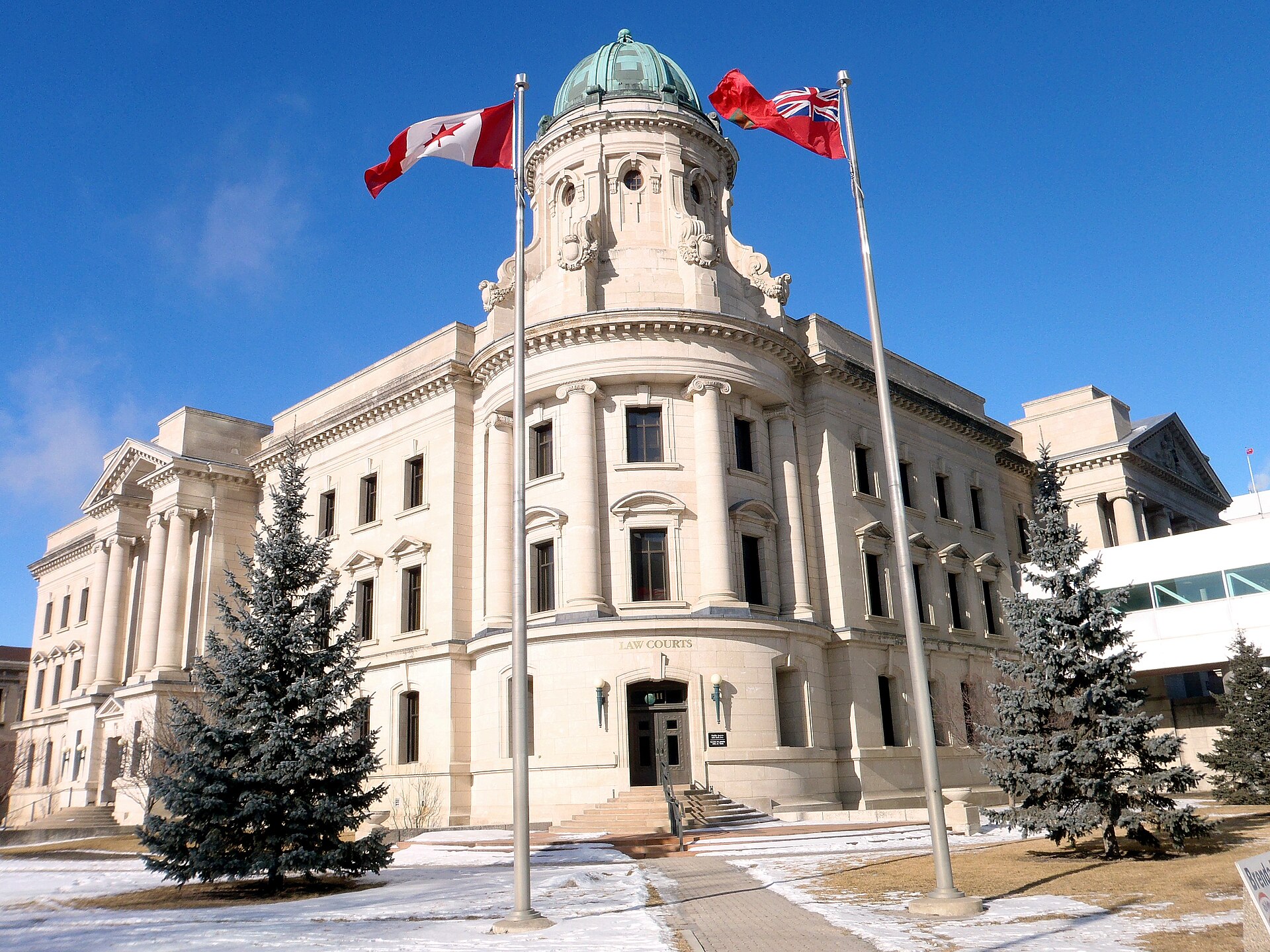
The Federal Court has dismissed a Manitoba First Nation’s 19-year-old lawsuit over the size of the reserve land promised under Treaty 5, ruling that Ottawa did not breach the honour of the Crown or a fiduciary duty when it secured the community’s adhesion to the treaty in 1876.
Justice Paul Favel released his reasons in Black River First Nation v. His Majesty the King (2026 FC 1309) on Oct. 26, in docket T-1242-07. “The action and all claims for remedies are dismissed,” he wrote.
Black River filed its statement of claim on July 5, 2007. The court record shows that the trial was first set for May 2023, adjourned, and reset for November 2024. Evidence was heard over 23 hearing days in Winnipeg between Nov. 4 and Dec. 12, 2024, and final arguments followed on May 26 to 28, 2025. The decision arrived about 17 months after those arguments ended.
The dispute turned on the land formula in Treaty 5, signed in 1875. The court said that treaty set aside 160 acres for each family of five. Treaties 3 and 4, and every treaty after Treaty 5, from Treaty 6 to Treaty 11, set the figure at 640 acres per family of five. Black River argued that the Crown imposed inferior land and gratuity terms and failed to negotiate in good faith, resulting in a treaty land shortfall.
The First Nation framed the case as novel because it targeted how the Crown negotiated Treaty 5, rather than whether the treaty was later breached. The court noted that Black River did not challenge the validity of the treaty or of its own adhesion.
The Crown denied the claim. It said it was not obliged to negotiate identical land terms in every treaty, that it had the right to balance public interests against those of the First Nation, and that Treaty 5 was not an improvident bargain. Favel wrote that Black River had not proved the elements of a breach of fiduciary duty and had not established that the honour of the Crown was breached in the negotiation of Treaty 5 or in the 1876 adhesion.
The judgment also denied a motion by Black River for an adjournment, awarded Canada its costs of that motion, and gave the parties 90 days to agree on costs for the action or file submissions. The decision does not say whether Black River will appeal, and the First Nation has not publicly commented in the records reviewed by Canada News Media.
A Crown-Indigenous Relations Question Period note dated Feb. 23, 2026, and published on the government’s open data portal, described the 2007 case as one of several Black River claims before the courts. It said two other claims were filed on Jan. 30, 2026, in the Court of King’s Bench of Manitoba. One argues that Treaty 5 did not surrender subsurface rights. The other names Manitoba Hydro, the province and Canada and seeks compensation for economic activity in the First Nation’s traditional territory. The note’s recommended line for the minister was that the matters are before the courts and cannot be discussed in detail.
The ruling comes as treaty relationships are in the national spotlight. Manitoba Premier Wab Kinew has also urged the federal government to abolish the Indian Act.
Canada News Media reviewed the full reasons and judgment on the Federal Court’s decisions site, along with the federal Question Period note. We searched for earlier coverage of the ruling on Oct. 28 and found none.
If you find reporting like this useful, consider supporting Canada News Media, an independent Canadian newsroom with no corporate parent.
Sources: Federal Court decision 2026 FC 1309; Question Period note CIR-2026-QP-2941.
Follow Canada News Media
Get the day's top Canadian stories and our two daily 60-second news videos wherever you scroll.
X Threads Facebook Instagram LinkedIn TikTok YouTube Pinterest Reddit Substack Flipboard Newsletter RSS