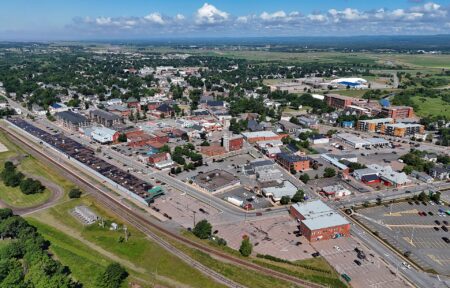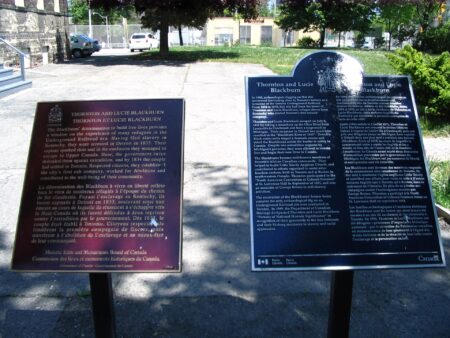
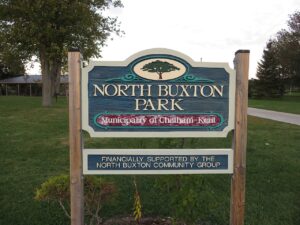

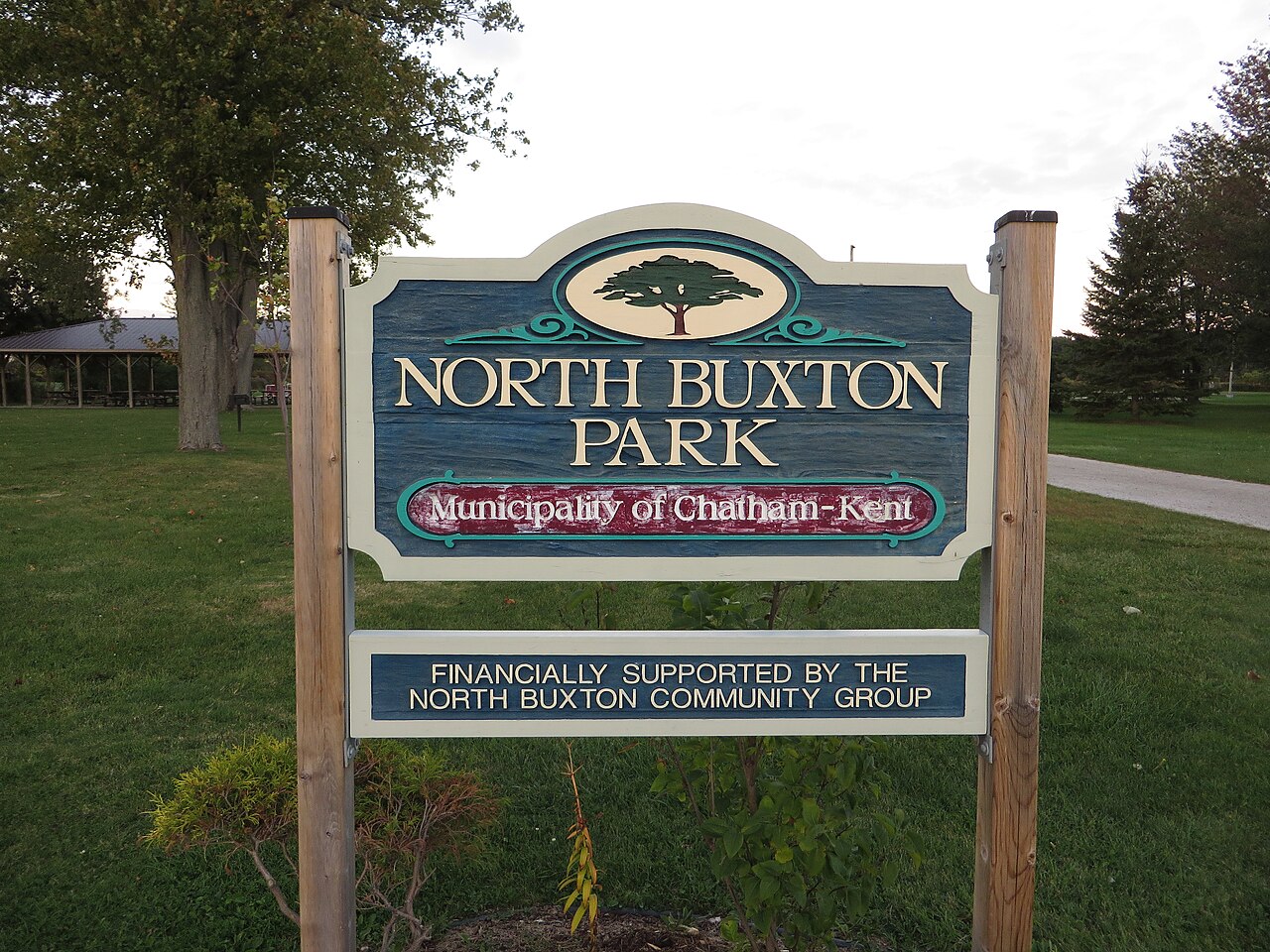
The Elgin Settlement, known as Buxton, was established in 1849 in what is now southwestern Ontario as a place where Black settlers could buy their own farms, according to The Canadian Encyclopedia.
Rev. William King, an Irish-born Presbyterian minister, founded it, the encyclopedia said. Parks Canada, which describes it as founded in 1849 by King and 15 former American slaves, designated the site a national historic site in 1999.
The land lay between Lake Erie and the Thames River. The Canadian Encyclopedia describes the tract as about six miles long and three miles wide (roughly 9.7 by 4.8 kilometres), and Parks Canada puts the site at some 4,680 hectares. Parks Canada said the land was bought as a joint stock company.
The terms were the point of the project. The encyclopedia said the land was divided into 50-acre lots that could only be bought by Black people, and that settlers had 10 years to pay for their property. Parks Canada likewise said settlers established farms on 50-acre plots that they purchased over time.
King’s own history complicates the story of the settlement’s founding. The Canadian Encyclopedia said he had lived in Louisiana and enslaved 15 people there, and that he had either inherited them or purchased them himself. It quoted King’s autobiography as saying that “one could not get faithful and trustworthy servants unless you bought them.” The encyclopedia said King arrived at Buxton with 15 people he had formerly enslaved. Neither source consulted for this article describes how or when they were freed.
The settlement grew quickly. The encyclopedia said the population reached 400 residents between 1852 and 1856, and that at its peak nearly 1,200 people lived in and around Buxton, without giving a date for that peak. Parks Canada said the settlement reached more than 1,000 residents by 1859. The two figures differ, and neither is dated precisely enough to reconcile them here.
Education drew attention beyond the settlement. The encyclopedia said the Buxton Mission School offered a classical education that included Greek and Latin, that white families sought it out, and that it became integrated. Parks Canada said Buxton had three integrated schools by 1859.
The settlement also built businesses. The encyclopedia said Henry K. Thomas and Wilson R. Abbott raised money for a sawmill and formed the Canada Mill and Mercantile Association, which it described as the first major Black-owned industry in Canada. It listed a gristmill, pearl ash and potash factories, a bank and a wooden tram to Lake Erie. Parks Canada listed a sawmill, a brickyard, a grist mill and a pearlash factory.
When the American Civil War began in 1861, 70 Buxton men left their families to fight in the Union Army, the encyclopedia said. It said many men returned after the war to their homes in the southern states, but it does not describe a settlement-wide departure. Parks Canada said the company was disbanded in 1873. The encyclopedia said King left in 1887 for Chatham, Ont., where he died in 1895.
Buxton was one of several Black communities that took shape in what is now Ontario and beyond in the 19th century. Canada News Media has reported on Josiah Henson’s arrival in Upper Canada in 1830, the 1861 court case that freed John Anderson, and the founding of Amber Valley, Alta., in 1910.
Several details remain unconfirmed here, including when Buxton’s first school opened and how King’s formerly enslaved group gained their freedom. Readers seeking those details are directed to the Buxton National Historic Site and Museum and to Parks Canada.
If you find reporting like this useful, consider supporting Canada News Media, an independent Canadian newsroom with no corporate parent.
Follow Canada News Media
Get the day's top Canadian stories and our two daily 60-second news videos wherever you scroll.
X Threads Facebook Instagram LinkedIn TikTok YouTube Pinterest Reddit Substack Flipboard Newsletter RSS