



COVID Toes Could Last For Months
<p class="canvas-atom canvas-text Mb(1.0em) Mb(0)–sm Mt(0.8em)–sm" type="text" content=""When we started looking at symptom duration, some of these patients are having really incredibly long-lasting symptoms," Dr. Esther Freeman, the principal investigator of the registry and the director of Global Health Dermatology at Massachusetts General Hospital in Boston, told NBC News. "In particular, we saw that with chilblains, also known as COVID toes, where they’ve been having skin symptoms for more than 60 days."” data-reactid=”21″>“When we started looking at symptom duration, some of these patients are having really incredibly long-lasting symptoms,” Dr. Esther Freeman, the principal investigator of the registry and the director of Global Health Dermatology at Massachusetts General Hospital in Boston, told NBC News. “In particular, we saw that with chilblains, also known as COVID toes, where they’ve been having skin symptoms for more than 60 days.”
<p class="canvas-atom canvas-text Mb(1.0em) Mb(0)–sm Mt(0.8em)–sm" type="text" content="One patient had COVID toes for 130 days, and another had the condition for more than 150 days, the study said. ” data-reactid=”22″>One patient had COVID toes for 130 days, and another had the condition for more than 150 days, the study said.
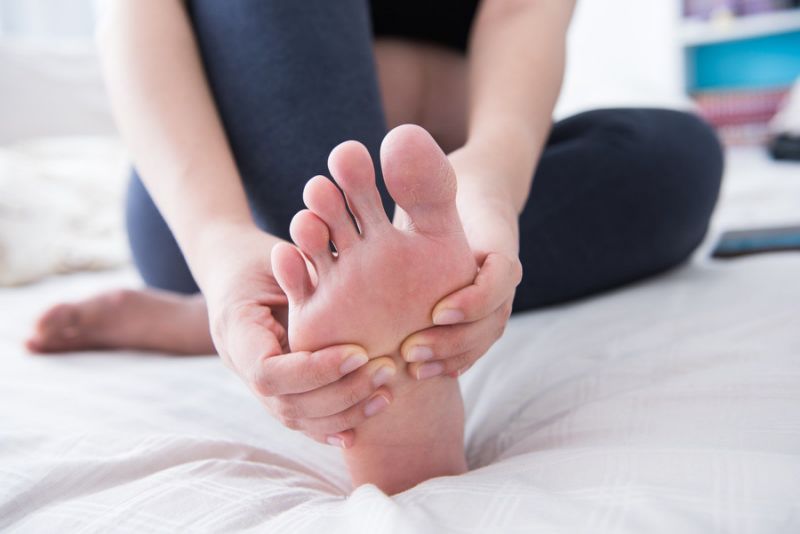
<p class="canvas-atom canvas-text Mb(1.0em) Mb(0)–sm Mt(0.8em)–sm" type="text" content=""They’ve had toe swelling and toe discoloration and toe pain for many months," said Freeman. "They’ve had this really kind of persistent inflammation." ” data-reactid=”23″>“They’ve had toe swelling and toe discoloration and toe pain for many months,” said Freeman. “They’ve had this really kind of persistent inflammation.”
<p class="canvas-atom canvas-text Mb(1.0em) Mb(0)–sm Mt(0.8em)–sm" type="text" content="RELATED: 11 Symptoms of COVID You Never Want to Get” data-reactid=”24″>RELATED: 11 Symptoms of COVID You Never Want to Get
Skin Symptoms a Common Sign of COVID
<p class="canvas-atom canvas-text Mb(1.0em) Mb(0)–sm Mt(0.8em)–sm" type="text" content="Other studies have shown that up to 20% of people diagnosed with COVID-19 report skin changes as part of their illness, including a rash, hives or breakouts resembling chicken pox or the scaly plaques of psoriasis. When doctors noticed several patients reported a rash on their feet, "COVID toes" became a common term and a source of curiosity. ” data-reactid=”26″>Other studies have shown that up to 20% of people diagnosed with COVID-19 report skin changes as part of their illness, including a rash, hives or breakouts resembling chicken pox or the scaly plaques of psoriasis. When doctors noticed several patients reported a rash on their feet, “COVID toes” became a common term and a source of curiosity.
<p class="canvas-atom canvas-text Mb(1.0em) Mb(0)–sm Mt(0.8em)–sm" type="text" content="Overall, COVID-related skin changes are so common that researchers behind the COVID Symptom Study say they should be considered a fourth key sign of COVID-19, along with fever, cough and loss of smell or taste.” data-reactid=”27″>Overall, COVID-related skin changes are so common that researchers behind the COVID Symptom Study say they should be considered a fourth key sign of COVID-19, along with fever, cough and loss of smell or taste.
<p class="canvas-atom canvas-text Mb(1.0em) Mb(0)–sm Mt(0.8em)–sm" type="text" content="The coronavirus has been observed to cause inflammation throughout the body, including in the lungs, heart and brain. COVID toes seem to be connected to this inflammatory process. "This data adds to our knowledge about how COVID-19 can affect multiple different organ systems, even after patients have recovered from their acute infection," said Freeman in a press release about the new study. "The skin can provide a visual window into inflammation that may be going on elsewhere in the body."” data-reactid=”28″>The coronavirus has been observed to cause inflammation throughout the body, including in the lungs, heart and brain. COVID toes seem to be connected to this inflammatory process. “This data adds to our knowledge about how COVID-19 can affect multiple different organ systems, even after patients have recovered from their acute infection,” said Freeman in a press release about the new study. “The skin can provide a visual window into inflammation that may be going on elsewhere in the body.”
<p class="canvas-atom canvas-text Mb(1.0em) Mb(0)–sm Mt(0.8em)–sm" type="text" content="RELATED: Dr. Fauci Says You Don’t Have to Do This Anymore to Avoid COVID” data-reactid=”29″>RELATED: Dr. Fauci Says You Don’t Have to Do This Anymore to Avoid COVID
What to Do About COVID Toes
<p class="canvas-atom canvas-text Mb(1.0em) Mb(0)–sm Mt(0.8em)–sm" type="text" content="According to the American Academy of Dermatology, children, teenagers, and young adults are most likely to develop COVID toes. Many never develop other symptoms of COVID-19, and when they do, symptoms tend to be mild. Applying a hydrocortisone cream to the affected area can reduce pain or itching.” data-reactid=”31″>According to the American Academy of Dermatology, children, teenagers, and young adults are most likely to develop COVID toes. Many never develop other symptoms of COVID-19, and when they do, symptoms tend to be mild. Applying a hydrocortisone cream to the affected area can reduce pain or itching.
<p class="canvas-atom canvas-text Mb(1.0em) Mb(0)–sm Mt(0.8em)–sm" type="text" content="If you experience any symptoms of COVID-19, including an unexplained skin rash, it’s best to contact your doctor for advice. ” data-reactid=”32″>If you experience any symptoms of COVID-19, including an unexplained skin rash, it’s best to contact your doctor for advice.
<p class="canvas-atom canvas-text Mb(1.0em) Mb(0)–sm Mt(0.8em)–sm" type="text" content="And do everything you can to prevent getting—and spreading—COVID-19 in the first place: Mask, get tested if you think you have coronavirus, avoid crowds (and bars, and house parties), practice social distancing, only run essential errands, wash your hands regularly, disinfect frequently touched surfaces, and to get through this pandemic at your healthiest, don’t miss these 35 Places You’re Most Likely to Catch COVID.” data-reactid=”33″>And do everything you can to prevent getting—and spreading—COVID-19 in the first place: Mask, get tested if you think you have coronavirus, avoid crowds (and bars, and house parties), practice social distancing, only run essential errands, wash your hands regularly, disinfect frequently touched surfaces, and to get through this pandemic at your healthiest, don’t miss these 35 Places You’re Most Likely to Catch COVID.