




A buyer who purchased the average Greater Toronto Area condominium apartment in August, put 20 per cent down and secured one of the best posted five-year fixed mortgage rates would face a principal-and-interest payment of roughly $2,583 a month. The average asking rent in the City of Toronto that same month was $2,571.
Those two numbers come from separate datasets that are rarely read against each other. The gap between them, about $12 a month, is the narrowest it has been since the Bank of Canada began raising rates in 2022.
The inputs are all public. The Toronto Regional Real Estate Board reported an average condominium apartment selling price of $617,593 across the GTA in August, in the Market Watch release issued Sept. 3. Rentals.ca and Urbanation, in the National Rent Report published Sept. 9, put the average asking rent for all property types in the City of Toronto at $2,571, down 1.8 per cent from a year earlier. Ratehub.ca listed the lowest available five-year fixed mortgage rates in Canada at between 3.94 and 4.14 per cent as of this week.
Run those through a 25-year amortization with 20 per cent down and semi-annual compounding, the Canadian convention, and the mortgage payment comes to between $2,583 and $2,637 depending on the rate.

What the comparison leaves out
Quite a lot, and it matters. Principal and interest is not the cost of owning a condominium. Maintenance fees, property taxes and insurance are excluded from the figure above, and together they typically add several hundred dollars a month to a GTA condo. Land transfer tax, legal fees and inspection costs land on closing day. A buyer paying the true carrying cost is still paying meaningfully more than a renter every month.
The larger barrier is the cash. Twenty per cent of $617,593 is $123,519, money a renter does not have to produce. The comparison is also directional rather than like for like: the $2,571 rent figure covers all property types in the City of Toronto, while the mortgage figure is for a condominium apartment across the wider GTA.
What the two lines do show is direction of travel, and that has changed.

Prices are falling faster than rents
Borrowing costs have stopped moving. The Bank of Canada held its target for the overnight rate at 2.25 per cent on Sept. 2, the seventh consecutive decision to hold, and flagged tariffs and oil prices as upside risks to inflation. The next scheduled announcement is Oct. 28.
Prices have not stopped moving. TRREB reported its MLS Home Price Index composite benchmark down 4.5 per cent year over year in August, with an average selling price across all home types of $993,410, down 2.7 per cent.
Rents are falling too, just more slowly. The national average asking rent was $2,035 in August, down 4.8 per cent year over year and the 23rd consecutive month of decline, according to Rentals.ca and Urbanation, which describes rents as being at their lowest level since 2022. In Toronto the decline was gentler at 1.8 per cent, and multi-bedroom units actually moved the other way, with three-bedroom asking rents up 3.5 per cent to $3,642 and two-bedroom rents up 0.3 per cent to $2,939.
Vancouver shows the same pattern, with a wider gap
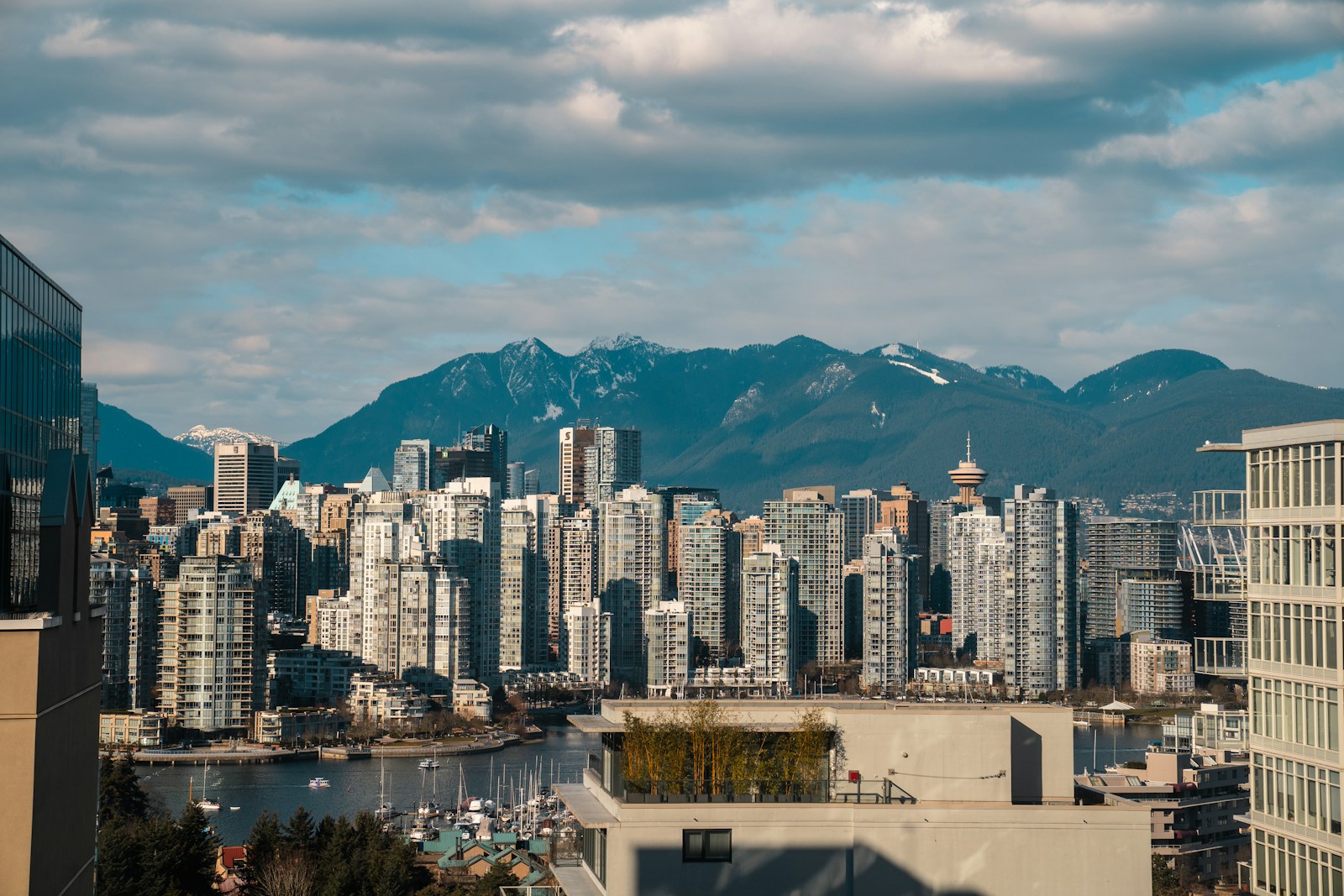
Greater Vancouver Realtors reported an apartment benchmark price of $686,200 in August, down 6.6 per cent from a year earlier. The same 20 per cent down payment and the same rate range produces a monthly payment between $2,870 and $2,929, against an average Vancouver asking rent of $2,729. That is a gap of $141 to $200 a month, wider than Toronto but narrowing on the same mechanism. The Vancouver figure is a benchmark price for a representative unit, while the Toronto figure is an average selling price, so the two cities are not strictly comparable to each other.
Buyers have not moved
Convergence on paper has not produced transactions. GTA REALTORS reported 5,057 sales in August, down 2.1 per cent year over year, with new listings of 12,075, down 14.1 per cent. Greater Vancouver apartment sales totalled 891, down 6.8 per cent from the 956 recorded in August 2025.
One number in the TRREB release does suggest where activity is concentrating. Within the City of Toronto, condominium apartments accounted for 885 sales in August against 550 detached homes. In the surrounding 905 region the ratio ran the other way, 445 condo sales against 1,849 detached.
Rentals.ca cautioned that the outlook for the rental market is “becoming more uncertain” because of the trade dispute with the United States, naming the auto and steel communities of southwestern and central Ontario, Quebec pulp and paper towns, and forestry-dependent centres in British Columbia and northern Ontario as the pressure points. If rental demand weakens further in those markets, the rent side of this calculation keeps falling and the convergence reverses.
Methodology: mortgage payments calculated on a 25-year amortization with 20 per cent down and semi-annual compounding, using price data from TRREB Market Watch (August 2026) and Greater Vancouver Realtors (August 2026), rent data from the Rentals.ca and Urbanation National Rent Report (September 2026), and posted rates from Ratehub.ca. Figures exclude condominium fees, property taxes, insurance and closing costs. Photographs in this article are illustrative stock images and do not depict any specific property.
Follow Canada News Media
Get the day's top Canadian stories and our two daily 60-second news videos wherever you scroll.
X Threads Facebook Instagram LinkedIn TikTok YouTube Pinterest Reddit Substack Flipboard Newsletter RSS